
Hiring more employees often signals that a business is growing. However, when employees keep leaving, that growth can become harder to sustain.
Frequent resignations disrupt operations, increase recruitment costs, and put additional pressure on remaining employees. For growing businesses, the problem may stem from people-management practices that have not kept pace with the organisation’s expansion.
Reducing employee turnover starts with understanding why people leave and addressing the workplace issues behind those decisions.
Why Employee Turnover Increases as Businesses Grow

As a business expands, its workforce, responsibilities, and operational demands change. HR practices that worked when the company had 15 employees may no longer be sufficient when it has 100.
Some common causes of employee turnover include:
- Unclear roles and responsibilities: Employees may struggle when reporting lines, expectations, and decision-making responsibilities are poorly defined.
- Ineffective management: Managers who lack the skills to lead, communicate, and manage performance can create frustrating work environments.
- Limited career development: Employees may leave when they cannot see opportunities to learn, progress or take on greater responsibilities.
- Uncompetitive compensation: Pay and benefits that do not reflect employees’ responsibilities or market expectations can affect retention.
- Poor employee experience: Inconsistent policies, unresolved workplace concerns and a lack of recognition can make employees less satisfied with their jobs.
These issues can develop gradually as a business grows. Without regular reviews of its people practices, management may only recognise the problem when resignations become frequent.
How to Reduce Employee Turnover in a Growing Business

Reducing turnover requires more than trying to keep employees happy. Businesses need people-management practices that support employees and help them perform effectively.
1. Review your organisational structure
Employees need to understand their roles, reporting lines and responsibilities. When these are unclear, work gets duplicated, decisions take longer, and accountability becomes difficult.
Review your organisational structure to identify overlapping responsibilities, management gaps and reporting issues. Make sure each role has clear expectations and that teams have the support needed to deliver their work.
2. Equip managers to lead their teams
An employee’s experience at work is often shaped by their immediate manager. Poor communication, inconsistent feedback and ineffective performance management can influence an employee’s decision to leave.
Provide managers with training in people management, communication, delegation, coaching and performance management. They need the skills to address employee concerns, set expectations and support team development.
3. Create opportunities for career development
Employees are more likely to consider leaving when they feel their careers have stalled.
Identify the skills employees need to progress and create opportunities for training, mentoring and internal career movement. Managers should also have regular development conversations with team members so employees understand what growth within the organisation can look like.
4. Review compensation and employee benefits
Employees compare their compensation with the responsibilities they carry and opportunities available elsewhere.
Review salary structures, benefits and job levels regularly. Consider whether compensation is competitive for the roles you need to retain and whether your reward practices are consistent across the organisation.
5. Understand why employees are leaving
Exit interviews can help identify recurring reasons employees resign. However, businesses should not wait until someone resigns asking about their experience.
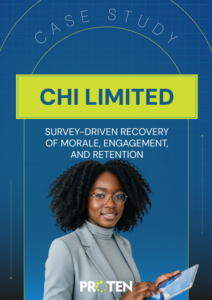
Employee feedback can reveal problems that management may otherwise overlook. For example, one of Nigeria’s leading FMCG companies reduced employee attrition from 10% in 2022 to 1.8% by 2024 after using employee feedback to identify workplace challenges and guide targeted interventions.
The company also recorded a 15% improvement in employee morale and a 25% reduction in reported burnout.
Read how the FMCG company improved employee morale and reduced attrition.
Use employee surveys, one-on-one conversations and engagement assessments to identify concerns early. Look for patterns across departments, managers and job levels. These insights can help you prioritise the changes most likely to improve retention.
How Proten Helps Growing Businesses Improve Employee Retention
As organisations expand, maintaining effective people practices becomes more demanding. Proten International helps businesses review and strengthen the HR structures, processes and capabilities that support their workforce.
Through Proten HR Advisory, organisations can assess their HR practices, review organisational structures and identify gaps affecting employee experience and performance.
Proten Learning Academy supports management and employee development through training that builds leadership, management and workplace skills.
For businesses that need additional operational HR support, Proten HR Outsourcing can help manage selected HR functions and processes, allowing internal teams to focus on wider workforce priorities.
These services help organisations address underlying people-management issues that may contribute to avoidable employee turnover.
When Should Your Business Seek HR Support?

Consider bringing in an HR partner if:
- Employees are resigning frequently, but the reasons are unclear.
- Managers struggle to handle performance and employee concerns.
- Your existing HR policies no longer reflect the size of your workforce.
- Recruitment is increasing, but retention remains a challenge.
- Roles, reporting lines, and responsibilities have become difficult to manage.
Waiting until turnover affects business operations can make the problem harder and more expensive to address.
Ready to improve employee retention in your business?
Proten International works with growing organisations to strengthen their HR practices, develop management capabilities and build effective workforce structures.
Speak with Proten about your HR needs.