CHI Limited (trading as Chivita|Hollandia), one of Nigeria’s leading food and beverage manufacturers, faced a familiar but costly organisational challenge: declining employee morale, elevated burnout, and rising attrition. Internal surveys signalled that the employer brand was under strain and that the organisation risked losing the very talent required to sustain growth and innovation.
Source: BusinessDay Nigeria, 2025
Instead of depending on informal feedback or disconnected HR initiatives, CHI Limited adopted a structured, evidence-based approach to understanding its workforce. The company implemented the Great Place to Work® Trust Index™ survey to assess employees’ perceptions of trust, pride and camaraderie within the organisation. Findings from the survey informed a series of coordinated interventions focused on employee wellness, professional development, performance management, work-life integration and employer-brand enhancement.
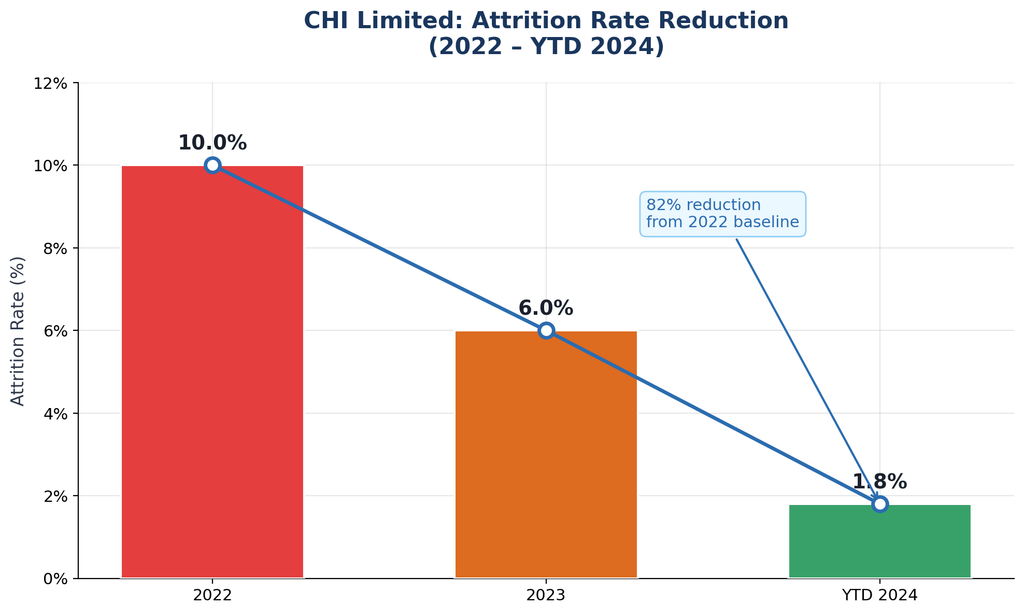
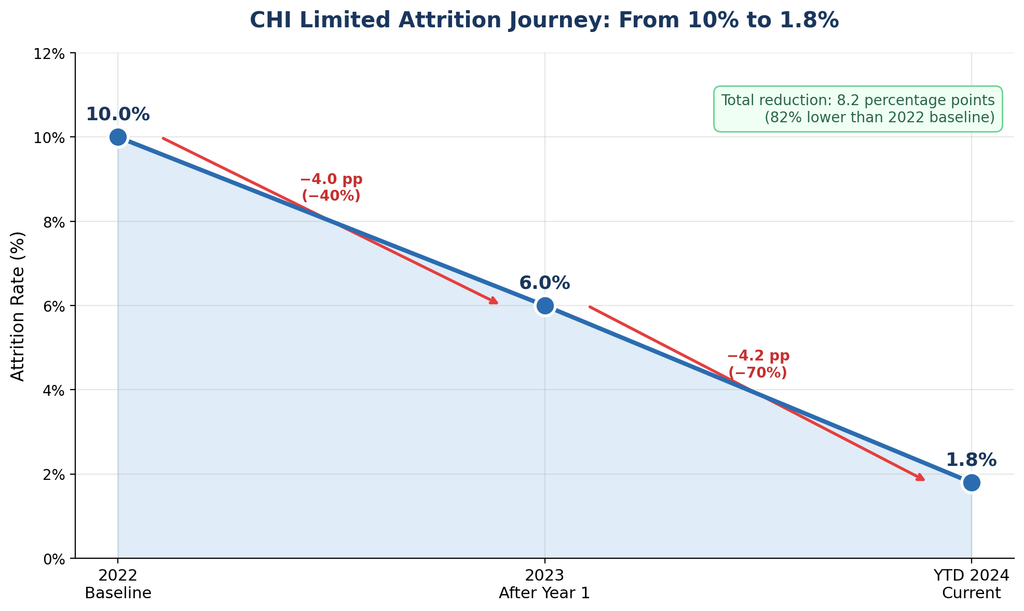
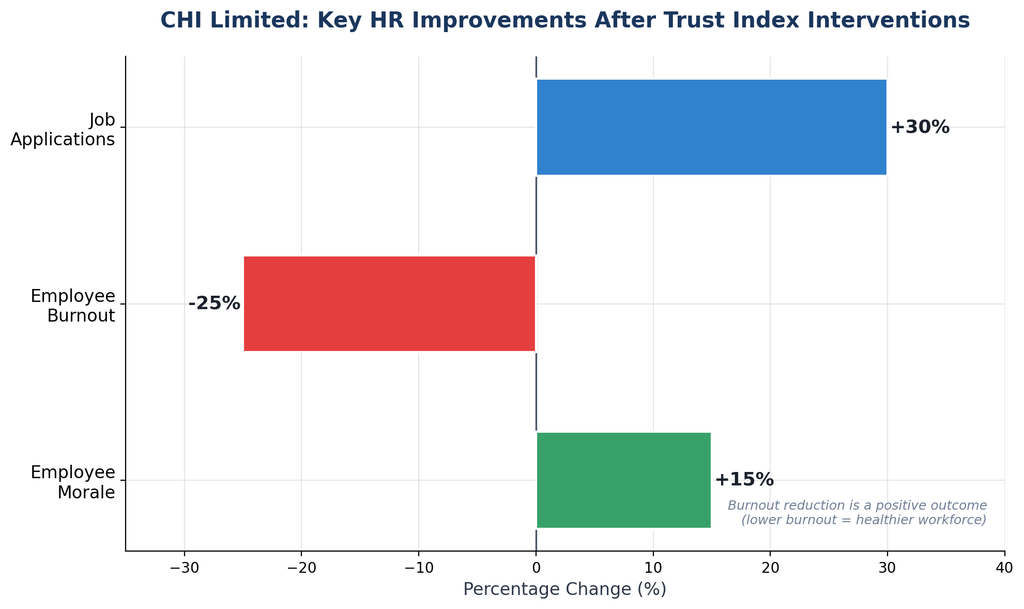
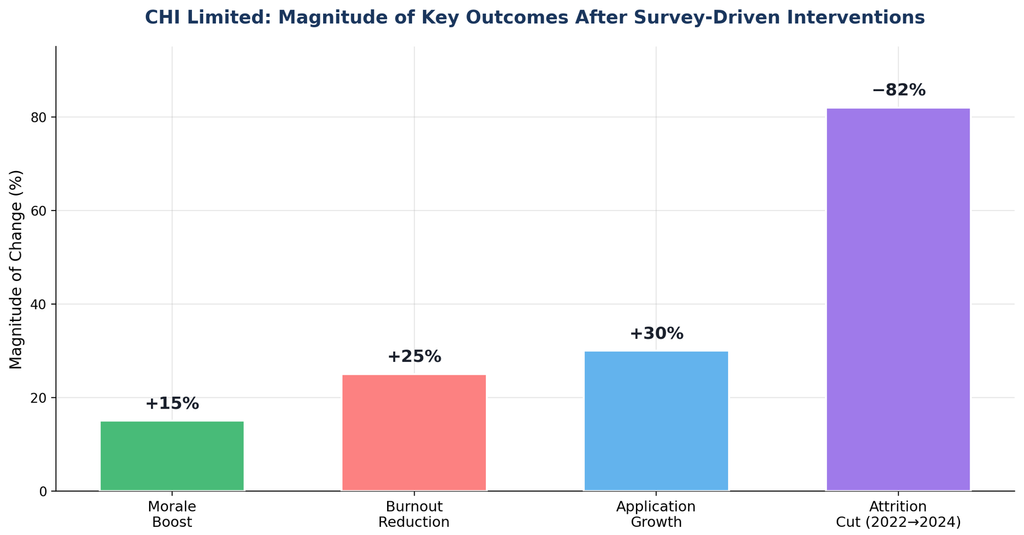
The impact was reflected in measurable improvements across key workforce indicators. Employee attrition declined from 10% in 2022 to 6% in 2023, reaching 1.8% year-to-date in 2024. Subsequent employee surveys also recorded a 15% improvement in morale and a 25% reduction in burnout. Externally, applications for vacant positions increased by 30%, suggesting improved employer attractiveness and growing interest from prospective candidates.
Diagnostic Approach
CHI Limited initiated the diagnostic phase in late 2022 through the Great Place to Work Trust Index survey. The assessment examined employee experience across five core dimensions: Credibility, Respect, Fairness, Pride, and Camaraderie, and provided a structured mechanism for anonymous feedback from frontline workers, plant operators, corporate teams, and commercial managers. The diagnostic process was designed to surface operational and cultural pain points while preserving employee confidentiality and encouraging candid input.
Key Diagnostic Findings
The diagnostic audit identified four interrelated workforce challenges:
- Burnout-induced attrition: Production and field sales teams reported high fatigue resulting from demanding shift schedules and market distribution targets. These conditions contributed to a voluntary turnover rate of 10% in 2022.
- Performance review friction: Annual appraisals were perceived as reactive rather than developmental. Employees cited insufficient regular feedback and an unclear connection between individual performance and rewards.
- Career advancement obstacles: Technical and administrative staff identified limited opportunities for structured upskilling and cross-departmental mobility.
- Work-life disconnect: Frontline manufacturing and logistics teams experienced extended shift hours without sufficient restorative support or workplace flexibility.
CHI Limited translated the diagnostic findings into an integrated operational intervention model organised around five core pillars.
1. Enterprise Wellness Programmes
To address workplace burnout, CHI Limited introduced targeted wellness initiatives:
- Mental health and stress management: On-site counselling, stress-reduction workshops, and confidential employee assistance programmes (EAP).
- Physical health and preventative care: Annual health screenings, ergonomic assessments for factory floor workers, and subsidised fitness club access.
- Rest and recovery protocol: Standardised break schedules in manufacturing units and continuous monitoring of shift rotations to prevent chronic exhaustion.
2. Employee Development Initiatives
To strengthen technical competency and establish clearer career pathways, the HR team restructured internal learning architectures:
- CHI Academy Leadership and Skills Framework: Tailored technical training for plant maintenance engineers, quality assurance personnel, and commercial managers.
- Cross-functional career rotations: Structured internal transfer mechanisms enabling talent mobility across production, supply chain, and corporate operations.
- Educational sponsorship and certifications: Partial tuition assistance and professional membership coverage for high-performing employees.
3. Structured Performance Management and Recognition
CHI Limited replaced outdated appraisal models with an iterative performance management framework:
- Bi-weekly and monthly feedback cadence: A shift from annual reviews to regular one-on-one check-ins focused on real-time coaching and barrier removal.
- Transparent KPI alignment: Clear cascading of company targets into individual, measurable key performance indicators.
- Spotlight and merit-based recognition: Monthly peer-nominated excellence awards and financial performance bonuses tied to quality, safety, and output benchmarks.
4. Work-Life Integration and Workplace Flexibility
Recognising the physical demands of fast-moving consumer goods (FMCG) manufacturing, management introduced policy changes to support employee well-being:
- Hybrid work models for corporate teams: Flexible remote arrangements for non-operational administrative personnel.
- Optimised shift scheduling: Predictable, roster-based shift patterns for factory and distribution workers to improve non-work planning.
- Family support and parental leave: Extended parental leave benefits and family wellness days.
5. Employer-Brand Strengthening
Internal cultural improvements were systematically integrated into external talent acquisition pipelines:
- Employee advocacy campaigns: Authentic employee stories, workplace achievements, and culture highlights shared across digital professional platforms.
- Great Place to Work certification utilisation: Certification benchmarks were used to demonstrate organisational transparency and progress.
- University and graduate trainee engagement: Strategic partnerships with higher institutions to build a pipeline of entry-level manufacturing and commercial talent.
Building a Sustainable Employee Engagement Framework
The lessons from CHI Limited’s experience can be translated into a practical framework for organisations seeking long-term improvements in workforce engagement and retention.
- Diagnose: Conduct employee engagement surveys, focus groups and structured feedback sessions to understand workforce concerns and identify recurring challenges.
- Prioritise: Analyse the findings and identify the issues requiring immediate attention, particularly those affecting trust, workload, burnout, career progression and retention.
- Intervene: Develop targeted programmes covering employee wellness, professional development, performance management, recognition and work-life integration.
- Communicate: Share the actions being taken, explain organisational priorities and provide employees with opportunities to participate in the improvement process.
- Measure: Monitor employee attrition, engagement, morale, burnout, absenteeism, internal mobility and recruitment indicators to evaluate progress.
- Improve continuously: Repeat employee feedback exercises and adjust interventions based on emerging workforce needs and organisational priorities.
This framework helps organisations move from reactive employee management towards a continuous improvement model grounded in employee experience and measurable outcomes.
Conclusion
CHI Limited’s experience demonstrates that a rigorous diagnostic process, when translated into a structured and measurable intervention framework, can materially improve workforce engagement and human capital outcomes. By combining confidential feedback, targeted wellness and development programmes, iterative performance management, work-life integration policies, and authentic employer branding, the organisation achieved significant reductions in voluntary attrition and burnout while increasing morale and qualified applicant interest. The approach provides a practical model for organisations seeking to convert diagnostic insight into sustained operational impact.
At Proten International, we help organisations develop and implement people-focused HR strategies that align employee experience with business objectives. From workforce diagnostics and HR consulting to talent management, employee development, and performance management, we provide the expertise and strategic support organisations need to build stronger, more resilient workforces.
If you are interested in driving morale, engagement, and retention within your organisation, contact us today.