
Career progression is often associated with promotions, expanded authority, and movement into more senior positions. However, not every experienced employee will continue to advance vertically, and not every employee who remains in the same role has stopped growing.
For organisations, the challenge is determining what happens when employees reach a point where further promotion appears unlikely, responsibilities become familiar, and opportunities for professional development narrow. Research on career plateauing and its relationship with job satisfaction, organisational commitment, performance and turnover intentions highlights why these situations warrant attention. At this stage, an employee may continue delivering strong results, gradually disengage from the work or withdraw discretionary effort while maintaining acceptable performance.
Source: Gallup, State of the Global Workplace
Structural Realities of the Modern Enterprise
Most organisations are skilled at managing their stars and their strugglers. The group in between gets far less attention: experienced, reliable mid-career employees who have reached a plateau, where the next promotion is unlikely, unavailable, or no longer attractive. They hold institutional knowledge, carry steady workloads, and mentor informally. Their value is easy to overlook, and so is the cost when it erodes. A career plateau is a point where the likelihood of further upward movement is low. A plateau is not automatically a performance problem. Many plateaued employees remain dependable, although research on career plateauing and its relationship with job satisfaction is limited.
Scenario A: Sustained Contribution
An experienced operations specialist has held the same position for five years. Performance remains strong, but the employee wants to learn new skills and take on more complex work. The next organisational level has no vacancy.
Many organisations struggle to navigate this moment. The employee’s request is a signal, and what the manager does next largely decides whether the employee stays on a path of sustained contribution or drifts toward gradual disengagement. The career plateau research review identifies proactivity and additional responsibilities as factors associated with lower career plateauing, supporting the value of meaningful development beyond promotion. A strong performer who asks for growth and is told “nothing is available” has been given an honest answer. If it is the only answer, though, the employee has also learned that the organisation cannot meet their ambitions, and the usual response is to quietly start looking elsewhere or to invest less.
Scenario B: Gradual Disengagement
An experienced project coordinator has delivered reliable results for several years. Over that time, the employee has repeatedly asked to join strategic projects and build new capabilities. Each request has met with a vague assurance and no action. The manager keeps assigning routine tasks because the employee is dependable and meets deadlines. Development conversations are postponed, and feedback goes no further than acknowledging completed work. Gradually, the employee stops proposing improvements and takes part in fewer voluntary initiatives, until they are doing only what formal expectations require.
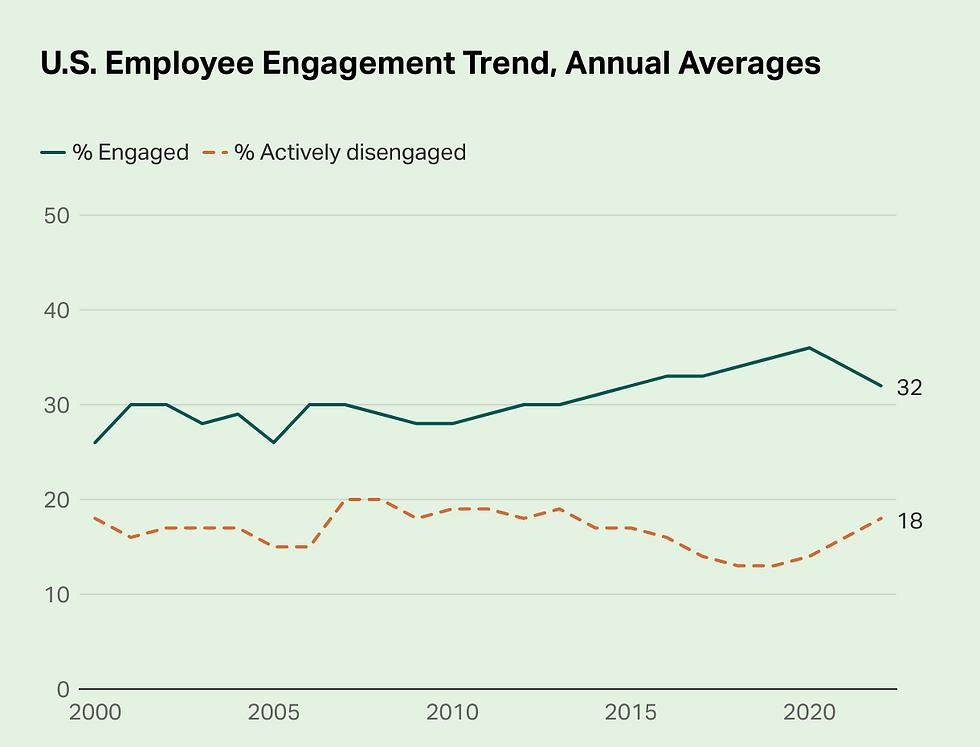
Performance indicators stay stable at first, which is why the change is easy to overlook. This is the early stage of the gradual disengagement path. It is also the stage at which a return to sustained contribution may be most achievable. In its 2022 analysis of quiet quitting and employee engagement, Gallup reported that 32% of US employees were engaged and 18% actively disengaged; these figures provide wider workforce context and are not specific to career plateaus.
Source: Gallup, 2024. Employee Turnover Is Preventable Yet Often Ignored.
Key Factors Sustaining Continued Contribution
- Renewed Sense of Purpose: Employees understand the value of their work, and managers reinforce its relevance to organisational goals.
- Autonomy and Professional Mastery: Expertise and independent contribution are recognised as legitimate forms of career growth, rather than substitutes for promotion.
- Recognition Beyond Promotion: Specialist career pathways, expert designations and visible influence provide meaningful recognition and professional standing.
- Continuous Development: New challenges, cross-functional collaboration and skills development prevent work from becoming repetitive.
Long-Term Organisational Implications
Productivity remains strong, while discretionary effort may increase as employees feel trusted and valued. Structured mentoring and knowledge-sharing strengthen institutional knowledge, while retention risks may decline. The employee can also become a stabilising influence, supporting colleagues navigating similar career plateaus.
The approach requires relatively modest investment, primarily in managerial time, development opportunities, and flexibility in role design.
Scenario C: Quiet Withdrawal
A long-serving employee has experienced several workplace disappointments, including an unfulfilled development opportunity, a restructuring that changed their role without consultation, and feedback perceived as dismissive. Although no formal complaint has been raised, these experiences have gradually weakened trust in the organisation. Core responsibilities are still fulfilled, but participation in optional meetings declines, fewer ideas are contributed, and there is less willingness to take on additional assignments.
Source: BringOn
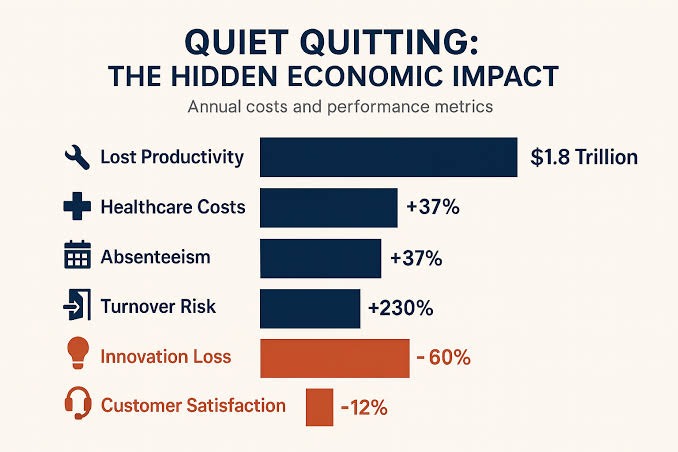
This is not necessarily poor performance or open resistance. Rather, it reflects a gradual reduction in emotional investment, initiative, and discretionary effort that may previously have distinguished the employee’s contribution. Gallup’s analysis of quiet quitting describes how employees who are not engaged may continue meeting basic job requirements while becoming psychologically detached from their work.
Key Factors Driving Quiet Withdrawal
- Erosion of Trust: Repeated unmet promises and decisions made without adequate communication weaken confidence in management.
- Perceived Futility of Speaking Up: When previous concerns produce little change, employees may stop sharing feedback or raising issues.
- Declining Organisational Attachment: Work becomes increasingly transactional, with less personal meaning, energy, and commitment invested in the organisation.
Long-Term Consequences
Most of the employee’s discretionary effort is lost. Their informal influence can turn cynical, and withdrawn employees can colour the attitudes of colleagues around them. The employee may stay for years as a hidden cost, or leave suddenly when an outside opportunity appears.
HR and Managerial Interventions That Can Change the Outcome
- Structured career conversations: Hold career discussions separately from routine performance reviews. Explore what the employee values, which skills they want to build, what has become repetitive, and what development would help if promotion is unavailable. The aim is to understand the employee’s perspective and not to assume everyone wants promotion.
- Role redesign: Add problem-solving responsibility, project ownership, process improvement, cross-functional work, or specialist assignments. Redesign should not become a way to add work without recognition, resources, or adjustment to existing duties. Agree on scope, expected outcomes, available time, and how the extra contribution will be recognised.
- Lateral development pathways: Not every career moves upward. Lateral moves let employees gain experience in a new function, deepen specialist expertise, or apply existing capabilities to new problems. An experienced operations employee, for example, might support quality assurance, systems implementation, or internal training. This builds organisational flexibility without requiring a vacant senior post.
- Recognising expertise and enabling knowledge transfer: Mentoring, documenting critical processes, leading communities of practice, and advising on complex work should be treated as real work, not informal obligations added to existing workloads. Knowledge transfer also reduces dependence on individuals and supports continuity.
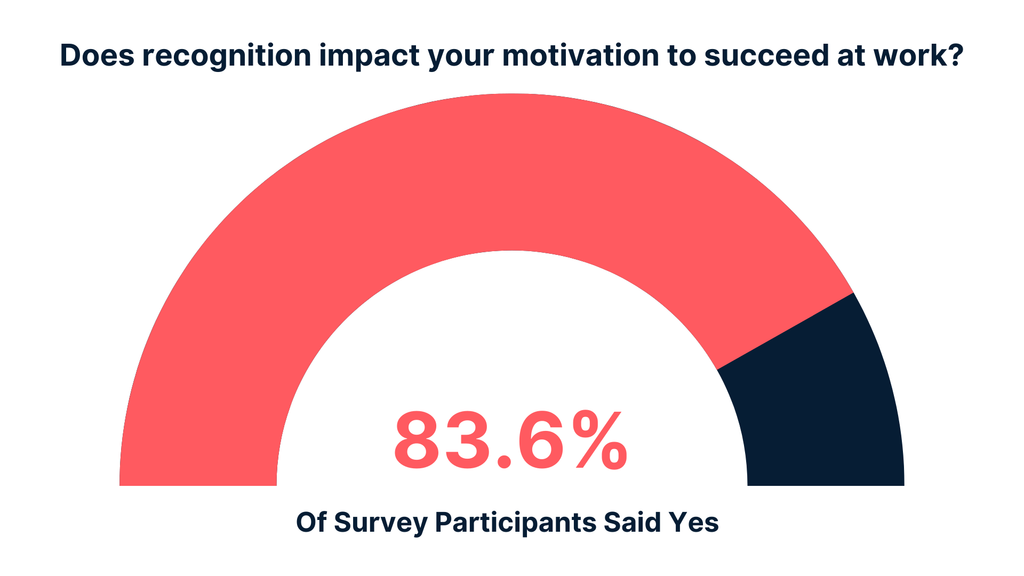
- Specific, credible recognition: Generic praise falls short when employees want evidence that their contribution is understood. Tie recognition to concrete outcomes such as improved reliability, reduced rework, successful delivery, or the development of junior colleagues. Where pay or promotion is constrained, say so honestly and identify what can change. Recognition does not replace fair pay or genuine development.
Source: Nectar
- Internal mobility and succession planning: HR should identify roles with limited progression options and assess alternative pathways, including specialist tracks, internal vacancies, project assignments, and rotations. Processes should be transparent enough that employees can understand eligibility and access opportunities without relying on informal manager networks. Gallup’s work on employee engagement and quiet quitting also emphasises the role managers play in employees’ engagement and their access to growth and support.
Conclusion
The plateau itself is not the problem. The problem is what organisations do, or fail to do, when someone reaches one. Where leaders treat the plateau as a conversation to be had, a role to be reshaped, and a contribution to be valued, employees can remain among the most productive and stabilising people in the organisation. Where it is ignored, or met only with performance pressure, the same people can drift into disengagement or withdrawal which can weaken output over time.
Proten International helps organisations strengthen employee engagement, improve retention and build workplaces where people feel valued and motivated to contribute. Take a proactive approach to workforce management because retaining talent means more than keeping employees; it means creating the conditions for them to thrive.