
Organisations invest in technology, automation, training, and process improvement to increase productivity. Yet one important source of performance is often overlooked: how effectively employees’ capabilities are used.
Employees bring different strengths, skills, experiences, and ways of solving problems to their work. However, many organisations continue to structure work primarily around job titles and fixed job descriptions, with limited consideration for how individual capabilities can be better applied to improve results.
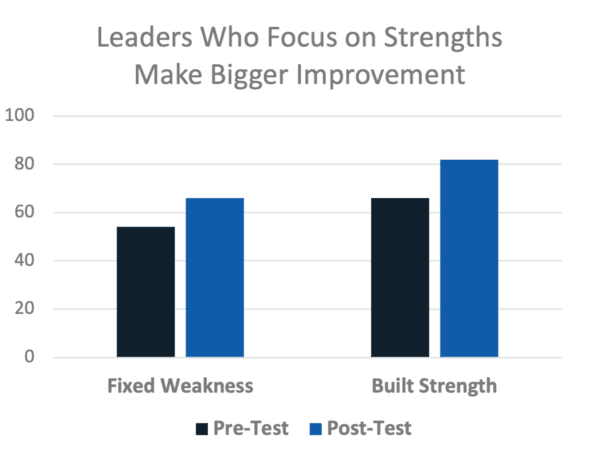
Traditional performance management also tends to focus heavily on identifying and correcting weaknesses. While addressing performance gaps is necessary, this approach can overlook opportunities to improve output by building on employees’ existing strengths.
Source: ZengerFolkman
Strengths-led management offers a different approach. It involves identifying what employees do well and deliberately using those capabilities in task allocation, team composition, coaching, and workflow design. The objective is not to allow employees to do only what they enjoy or to ignore their weaknesses. Rather, it is to ensure that people are well placed to contribute effectively while meeting the standards their roles require.
This whitepaper examines how organisations can move from simply managing employees within existing roles to deliberately aligning workforce capabilities with business needs. It proposes a practical framework for identifying strengths, reviewing workflows, allocating tasks, measuring results, and sustaining improvements.
The Productivity Challenge: Are Organisations Making the Best Use of Their People?
Technology, automation, and process improvement have changed how organisations operate. However, employees remain central to many of the activities that determine business performance. They make decisions, solve problems, interpret information, communicate with customers, generate ideas, manage relationships, and execute operational processes. The way these responsibilities are organised can influence how quickly work gets done and the quality of the output.
Despite this, many organisations continue to structure work mainly around positions rather than the capabilities required to perform individual tasks effectively. These structures are necessary, but they do not always ensure that employees’ capabilities are being used in the most effective way.
Source: Gallup Clifton strengths meta-analyses (2024).
For example, two employees may hold the same job title but have different strengths. One may be particularly effective at analysing information and solving complex problems, while another may excel at managing relationships, coordinating activities, or communicating with customers.
A rigid approach to task allocation may fail to take these differences into account. As a result, work may take longer than necessary, employees may expend more effort than the task requires, and opportunities to improve the team’s overall performance may be missed.
The same challenge exists in performance management. When discussions focus almost entirely on weaknesses and unmet targets, managers may overlook the capabilities employees already demonstrate and the opportunities to build on them.
This does not mean that weaknesses should be ignored. Employees must still meet the minimum requirements of their roles, and capability gaps that affect quality, safety, compliance, or team performance must be addressed. The real opportunity is to balance these responsibilities with a more deliberate effort to identify and use employee strengths.
Understanding Strengths-Led Management
Strengths-led management is an approach to managing people and work that identifies employees’ demonstrated capabilities and uses them to guide task allocation, development, coaching, team composition, and workflow design.
Strengths-led management involves three related activities:
- Strengths identification: Understanding the capabilities employees demonstrate consistently through their work, experience, feedback, and results.
- Strengths development: Helping employees improve and extend these capabilities through coaching, training, practice, and appropriate work opportunities.
- Strengths-led work design: Using knowledge of these capabilities to inform how tasks are assigned, how teams are formed, and how workflows are organised.
The third activity is particularly important. Identifying strengths is useful, but the greatest organisational opportunity comes when that knowledge influences how work is actually performed.
The Business Case for Strengths-Led Management
Strengths-led management can help organisations improve how people contribute to business results. Its value lies not only in helping employees feel more engaged, but also in creating opportunities to organise work more effectively.
Source: NT – How to build a healthy team
I. Better Employee Engagement
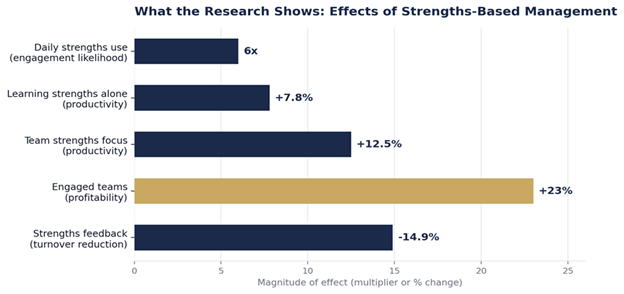
Employees are more likely to feel engaged when they understand how their abilities contribute to meaningful work and have opportunities to use those abilities. Gallup has reported that employees who use their strengths every day are approximately six times more likely to be engaged at work. This is an association with reported engagement, not evidence that strengths use automatically increases productivity by six times.
The practical implication for organisations is that managers should pay attention to whether employees have regular opportunities to use their capabilities, receive useful feedback, and understand the value of their contributions.
II. Improved Business Performance
Gallup’s meta-analysis of strengths-based employee development examined relationships between strengths-based development and several organisational outcomes, including sales, profitability, customer engagement, employee engagement, turnover, and safety.
The findings suggest that strengths-based development can be associated with positive business outcomes. The business opportunity is to use these findings as a reason to examine how employees are managed and how work is organised, then measure whether changes produce better results in the organisation’s own operating environment.
III. Reduced Operational Friction
Operational friction occurs when work takes longer than necessary, responsibilities are unclear, tasks have to be repeated, or employees depend on one another in ways that delay delivery. Some of these problems arise from poorly designed processes. Others may result from a mismatch between the demands of a task and the capabilities available to perform it.
For example, assigning a task requiring detailed analysis to someone who has not developed the necessary analytical skills may increase the likelihood of errors and rework. Where another team member has the relevant capability, a better allocation of responsibilities may improve the quality and speed of delivery.
IV. Better Use of Training and Development Resources
Training is an important part of workforce development, but not every performance problem requires the same intervention. Sometimes an employee needs additional training to meet the requirements of a role. In other cases, the employee already has valuable capabilities that are not being used effectively.
Strengths-led management helps managers make this distinction. It encourages them to consider whether the best response is to build a new capability, improve an existing one, change how work is allocated, or combine several of these approaches.
V. Stronger Team Performance
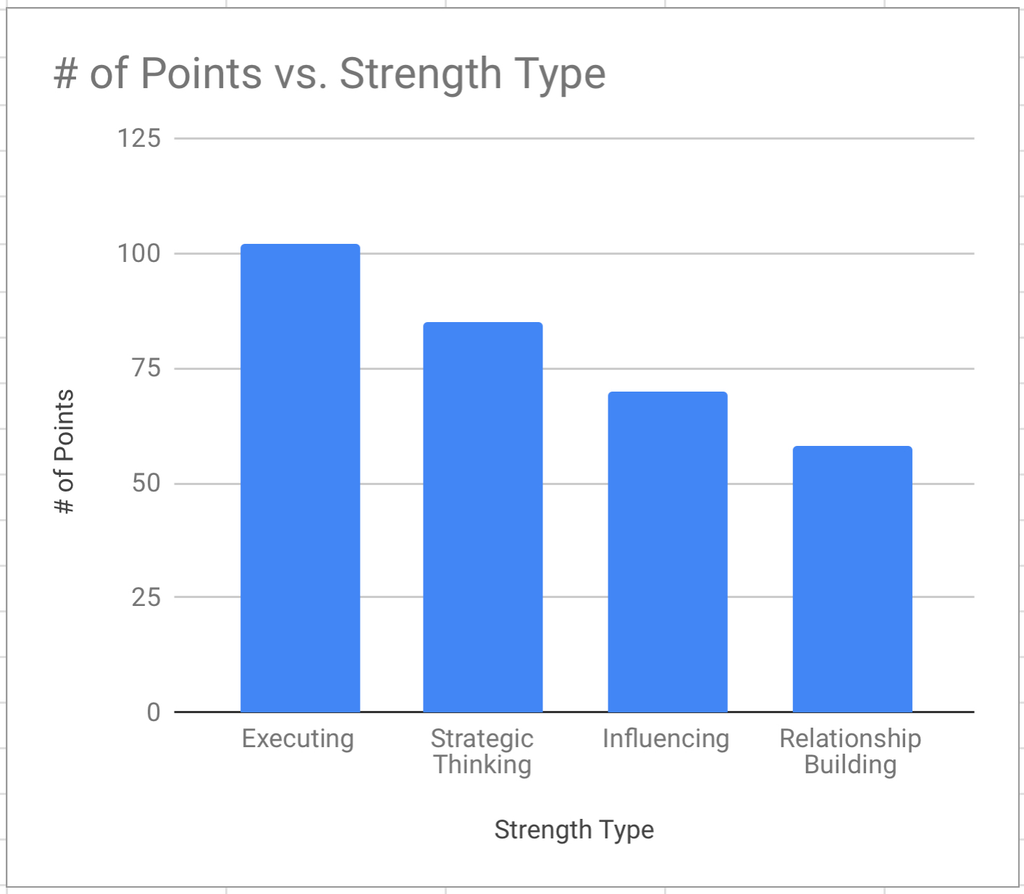
A team does not need every member to have identical strengths. It needs the right combination of capabilities to deliver its objectives. A team with strong analytical skills, for example, may still struggle if it lacks effective communication, coordination, or execution. Similarly, a team with excellent interpersonal skills may need stronger technical or problem-solving capabilities to handle complex assignments.
Managers who understand the capabilities available across their teams can identify gaps, build complementary teams, and allocate responsibilities more deliberately. The objective is not to create teams in which everyone has the same strengths, but to ensure that the team collectively has the capabilities required to perform.
From Strengths Identification to Workflow Redesign
Identifying employee strengths is only the starting point. To improve organisational performance, managers must consider how those strengths can be applied to the work that needs to be done. This requires a shift from viewing job descriptions as fixed lists of activities to examining the tasks, capabilities, and working relationships that make up a role.
Job descriptions remain important. They establish responsibilities, reporting relationships, and expectations. However, within appropriate operational and regulatory limits, managers can review how individual tasks are allocated and how employees work together.
Consider a customer service team responsible for handling enquiries, resolving complaints, maintaining records, and escalating complex cases. A traditional approach might allocate all these activities equally across team members. A strengths-led approach would first identify the capabilities required for each activity and assess how those capabilities are distributed across the team.
Employees with strong analytical and problem-solving capabilities might take responsibility for complex cases. Those with strong interpersonal and communication skills might handle sensitive customer interactions. Employees with strong organisational skills might help improve case tracking and follow-up processes. These arrangements would still require clear responsibilities, appropriate training, and workload balance. They should also be reviewed against measurable results rather than assumed to be effective simply because they appear to fit individual strengths.
Operationalising Strengths-Led Management
To translate strengths-led management into practical business outcomes, organisations can follow five steps.
Step 1: Identify Employee Capabilities
The first step is to understand what employees can do well and where they need further development.
This should not depend solely on an employee’s opinion of their strengths or a manager’s personal impression. Organisations should draw on several sources of information, including: Performance records and the quality of completed work, Employee self-assessments and career interests, Manager observations and coaching conversations, and Feedback from colleagues, customers, and other relevant stakeholders.
The aim is to build a practical understanding of the capabilities available across the team, rather than to label employees permanently or assume that a particular assessment defines everything they can do.
Step 2: Map Capabilities to Tasks and Workflows
Once capabilities have been identified, managers should examine the work itself. This involves breaking important workflows into their main tasks and identifying what each task requires. These requirements may include technical knowledge, analytical ability, communication, judgement, coordination, attention to detail, or speed of execution.
Managers can then compare the requirements of the work with the capabilities available across the team. This exercise may reveal that some tasks are assigned based mainly on job titles or historical practice rather than operational need. It may also reveal capability gaps, duplicated effort, unnecessary handovers, or overdependence on particular employees.
Step 3: Redesign Task Allocation
Where the assessment identifies opportunities for improvement, managers can adjust how work is distributed. Possible actions include assigning particular tasks to employees whose demonstrated capabilities match the requirements or reallocating responsibilities that create avoidable delays or repeated errors.
Any changes should preserve accountability and take account of workload, employee development, business priorities, and the requirements of the role. Strengths-led management should not become an informal system in which employees select only their preferred tasks or transfer difficult responsibilities to colleagues. Managers remain responsible for ensuring that all necessary work is completed to the required standard.
Step 4: Measure the Results
Changes to task allocation should be evaluated against clear performance measures. Before implementing a new arrangement, managers should establish a baseline that shows how the process or team is currently performing. They can then compare results after the changes have been introduced.
Managers should also consider other factors that could influence the results, such as changes in workload, staffing, technology, or demand. This helps prevent organisations from attributing every improvement to strengths-led management without sufficient evidence.
Step 5: Refine and Sustain the Approach
Strengths-led management should be treated as an ongoing management practice rather than a one-off intervention. Managers should review the results with employees, assess whether the new arrangements are working, and identify unintended consequences. These may include increased workload for high performers, new bottlenecks, gaps in task ownership, or reduced development opportunities for other employees.
Where the changes produce clear improvements without creating new problems, the organisation can consider applying the lessons to other teams or workflows. Where the results are mixed, the approach should be adjusted. The aim is continuous improvement based on evidence, not the adoption of a management philosophy for its own sake.
Conclusion: Aligning People, Work, and Performance
Organisational productivity depends not only on the number of employees available or the technology they use, but also on how effectively their capabilities are applied to the work that needs to be done. Traditional job structures and performance-management systems provide important foundations for accountability. However, when organisations focus exclusively on job requirements and capability gaps, they may overlook opportunities to improve performance by making better use of existing strengths.
Strengths-led management offers a way to address this gap. By identifying employee capabilities, reviewing workflows, improving task allocation, building complementary teams, and measuring the results, organisations can make more deliberate decisions about how work is organised.
The approach does not eliminate the need to address weaknesses, maintain minimum competence standards, or hold employees accountable. Its value lies in providing a structured way to identify opportunities, test improvements, and learn from the results.
For business leaders, the key question is therefore not simply whether employees are meeting the requirements of their positions. It is also whether the organisation has designed work in a way that enables its people to contribute effectively, develop their capabilities, and deliver the outcomes the business requires. The opportunity is to move beyond managing people solely within existing job structures and begin managing workforce capabilities as an important part of organisational performance.
How Proten International Can Help
Proten International supports organisations in identifying workforce capability gaps and opportunities, strengthening performance management, developing managers, and improving organisational effectiveness. Through workforce and organisational development interventions, we help businesses examine how their people, processes, and structures can better support their strategic objectives.
Partner with Proten International to explore how a more deliberate approach to workforce capability can support stronger execution and measurable business value.