
At some point, every growing team hits a hiring wall.
The team gets bigger, the roles are more complex, and what used to work simply doesn’t anymore.
The problem isn’t the talent market. Most times, it is something internal, and a lot of teams don’t catch it until they’ve already made a handful of hires they regret.
A hiring playbook fixes it. Here’s why your team needs one.
What Happens When Teams Hire Without a Playbook
Without a shared process, every manager runs their own version of hiring. One does three interviews, another does one. One scores candidates on a Scorecard, another goes with a gut feel. One briefs the team before the debrief, another doesn’t.
The outcome is a team built on incompatible decisions. Some hires clear a high bar. Others don’t. And because nobody defined the bar in writing, nobody can explain why.
Onboarding suffers the same fate. When hiring managers skip documenting what success looks like before the hire, new employees spend their first 90 days trying to figure out what they were actually brought in to do.
What a Hiring Playbook Actually Contains
A hiring playbook is a documented process your whole team follows, from the moment a role opens to the day an offer is signed.
At its core, it covers four things:
1. Role definition:
A framework for scoping the role before writing the job post. What does this person own? What does success look like in 90 days? What skills predict that outcome?
2. Interview structure:
A consistent set of stages, questions, and time expectations so every candidate moves through the same process regardless of who’s running it.
3. Scoring criteria:
A scorecard that ties each interview question to a specific competency. Interviewers rate candidates independently before the group debriefs, which surfaces real disagreement instead of groupthink.
4. Offer and handoff process:
How the team moves from decision to offer, and how hiring passes to onboarding without critical context getting lost.
The Real Cost of Not Having One
In the Nigerian job market, where top talent receives multiple offers and word travels fast, a broken hiring process carries a real price.
A bad hire costs up to five times their annual salary to replace. That covers recruiting fees, lost productivity, team disruption, and the time spent starting the search over.
The cost that doesn’t show up on a balance sheet is reputation. Nigerian professionals talk. When candidates experience a disorganised hiring process, they share it with their networks on LinkedIn and in industry circles. The companies that hire well get recommended. The ones that don’t get avoided.
When hiring feels inconsistent internally, the existing team notices too. They see who gets brought in, and they form an opinion about the standards the company actually holds.


When Does a Team Need One?
The answer is earlier than most teams think.
If more than one person is involved in a hiring decision, you need a playbook. If you’re filling more than five roles a year, you need a playbook. If a hiring debrief has ever turned into a debate driven by personal preference rather than clear criteria, you need a playbook.
Think of it like a recipe. When you’re cooking for two, you don’t need one written down. When you’re feeding twenty and three different people are in the kitchen, you do.
Many Nigerian startups and SMEs push back with “we’re too small for this.” Building a playbook when you’re small is straightforward. Building one after five inconsistent hires, while managing a growing team, costs significantly more time and energy.
How to Build One Without Starting From Scratch
Start with your last hire. Document every step you took, what worked, what didn’t, and what you would change. That’s the first draft of your playbook.
Then define the three to five competencies every person at your company needs to demonstrate, regardless of role. Build those into every scorecard.
Finally, set a feedback SLA. Every interviewer completes their scorecard within 24 hours. Every candidate gets a status update within 48. Those two rules alone will separate your process from most companies competing for the same talent.
If you’d rather not build from zero, we’ve done it for you.
Get the Free Hiring Playbook
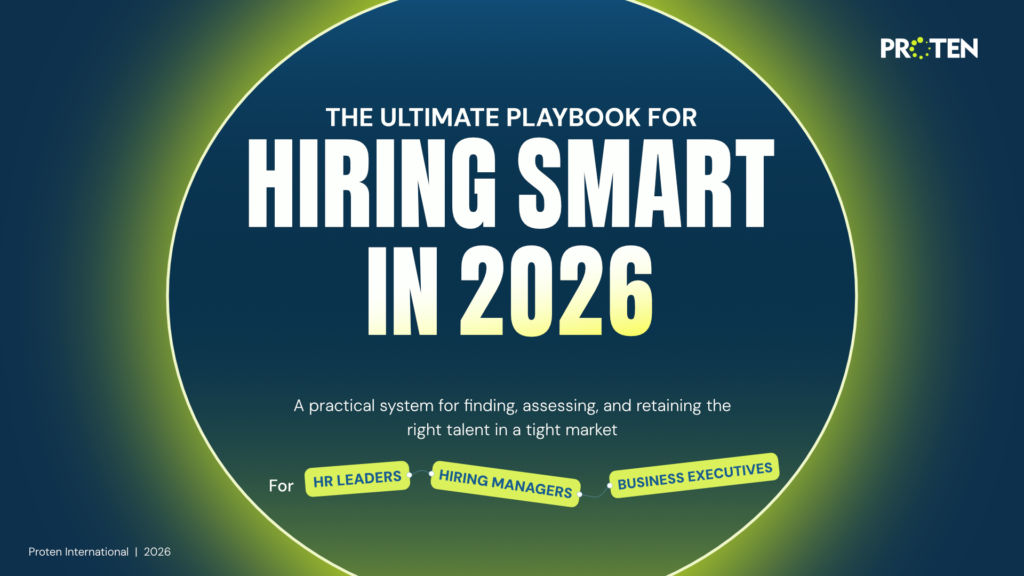
The Ultimate Hiring Playbook covers every stage in detail: how to define roles, structure interviews, score candidates, and move from decision to offer without losing momentum.
It’s built for growing teams that need a process they can run today, not after the next bad hire.