Employee retention remains one of the pressing challenges facing Human Resources professionals globally. High staff turnover leads to increased recruitment costs, reduced productivity, lower morale, and operational disruption. While organisations often focus on compensation and benefits as retention strategies, research increasingly demonstrates that workplace relationships, communication, leadership quality, and organisational culture significantly influence an employee’s decision to remain with an organisation
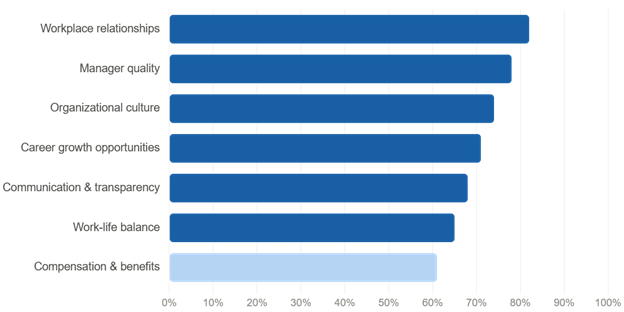
Source: SHRM/Gallup
Employees do not leave companies; they leave managers, cultures, and broken relationships. Gallup’s 2024 State of the Global Workplace report found that 70% of variance in team engagement is explained by the manager, and management quality is almost entirely determined by soft-skill competency.
The Connection Between Soft Skills and Employee Retention
1. Improved Workplace Relationships Respect and trust are not incidental to retention; they are the foundation of it. Managers who lead with emotional intelligence and clear communication create environments where conflict shrinks, and loyalty grows. When employees feel genuinely heard, they stop looking for the exit.
2. Enhanced Employee Engagement Engagement is not a survey score; it is what happens when people feel connected to their team and their purpose. Soft skills drive the everyday recognition, collaboration, and candour that transform a job into a commitment. Invest in those interactions, and watch disengagement drop.
3. Stronger Leadership Effectiveness The data is unambiguous: people quit managers, not companies. Leaders who coach, empathise, and communicate with intention do not just retain their teams, but they grow them. Developing leadership soft skills is the highest-leverage retention investment any organisation can make.
4. Increased Adaptability During Change Change is constant; attrition during change is optional. Employees equipped with resilience and adaptability navigate uncertainty without bolting. Organisations that build these skills proactively retain their talent precisely when the pressure to leave is highest and when losing them costs the most.
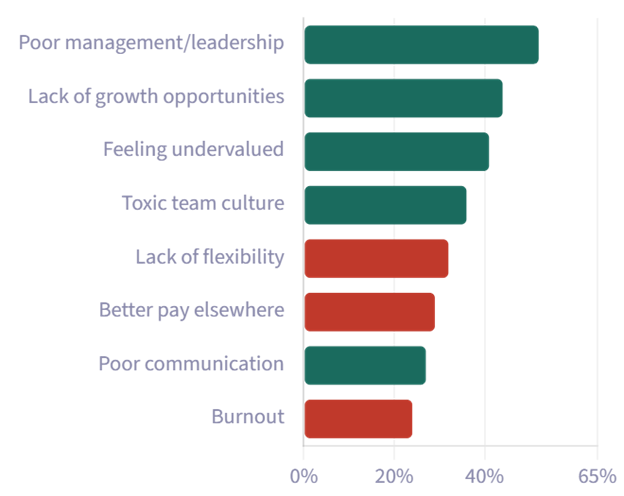
Sources: Gallup State of the Global Workplace
According to the MIT Sloan Management Review, toxic workplace culture is 10.4 times more likely to cause employee attrition than compensation, with the dominant predictors of toxicity being poor leadership communication, lack of psychological safety, and disrespectful peer interactions.
Benefits of Employee Retention to the Organisation
Maintaining workforce stability is no longer just a human resources objective; it is a core business strategy. When an organisation successfully retains its top talent, the positive ripple effects extend far beyond reducing recruitment tasks. High retention rates fundamentally safeguard an organisation’s financial health, operational efficiency, and market reputation. SHRM (2024) estimates that replacing a single employee costs between 50% and 200% of their annual salary, meaning a 10% reduction in voluntary turnover can represent millions in avoided costs for mid-to-large organisations.
- Financial savings: When an employee departs, the organisation incurs direct costs. According to research by the Society for Human Resource Management (SHRM), the cost of replacing an employee (including recruitment, onboarding, and productivity ramp-up) can cost between 50–200% of the employee’s annual salary.
- Preservation of Institutional Knowledge: Long-tenure employees retain client relationships, process expertise, and cultural memory unavailable in job descriptions.
- Accelerated Productivity and Momentum: New hires, regardless of their expertise, require a significant adjustment period to reach peak performance. Harvard Business Reviewhighlights that it typically takes a new employee up to a year to achieve full productivity in a complex corporate role.
- Sustained Team Morale and the “Turnover Contagion”: Low-turnover organisations attract higher-quality candidates through reputation, reducing hiring cost per role by 30%. High retention reinforces psychological safety, maintains balanced workloads, and boosts overall team morale.
- Seamless Customer Experience and Revenue Continuity: Companies with high retention outperform on customer satisfaction; employee tenure correlates with NPS scores. (Harvard Business Review)
- Leadership Pipeline: Retention enables succession planning; 74% of high-performing organisations promote internally vs 37% average. A company known for high employee longevity signals stability, fair management practices, and robust career progression opportunities, making it far easier to attract premium talent in the future.
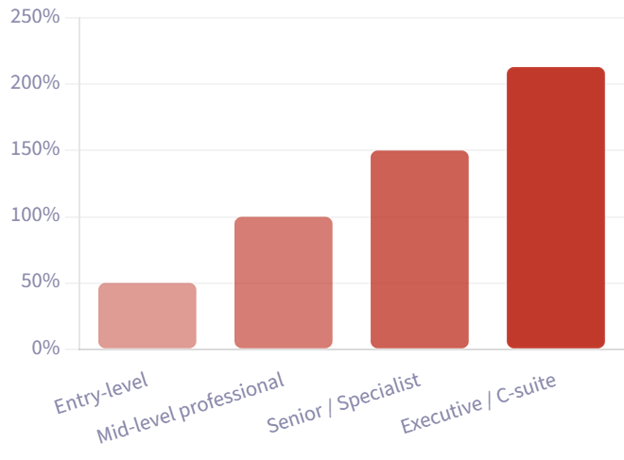
Source: Deloitte Global Human Capital Trends 2024
HR Strategies for Developing Soft Skills: Implementation Roadmap
Sustainable soft-skill integration is a 12–18 month transformation, not a single training event. The following phased roadmap provides HR leaders with a structured pathway from diagnostic to institutionalisation:
- Integrate Soft Skills into Recruitment: Hire for Soft Skills from Day One. Stop screening exclusively for technical competency. Embed structured behavioural interviews and validated emotional intelligence assessments into every hiring process.
- Build a Continuous Learning Infrastructure: Establish ongoing development pathways anchored in the skills that directly drive retention: leadership communication, emotional intelligence, conflict resolution, collaboration, and coaching.
- Rewire Performance Management: Performance evaluation systems should assess both technical performance and behavioural competencies. Integrate behavioural competencies alongside technical KPIs. Deploy 360-degree feedback, leadership behaviour assessments, and communication effectiveness reviews.
- Foster a Culture of Feedback and Recognition: Recognition and candid feedback are not perks; they are retention mechanisms. HR leaders must institutionalise open communication channels, manager-led coaching conversations, employee listening programmes, and meaningful recognition frameworks.
Measuring What Matters: Turning Soft Skills Into Hard Data
The most common objection to soft skills investment is also the weakest one: that it cannot be measured. It can. The challenge is not measurement; it is knowing which indicators to track and what they are telling you.
- Employee Engagement Scores: Pulse surveys and annual engagement assessments to capture shifts in trust, collaboration, and workplace satisfaction before they translate into resignation letters.
- Absenteeism Rates: Chronic absenteeism is rarely about illness. It is most often a symptom of disengagement, burnout, or broken workplace relationships, all remediable through a stronger interpersonal culture.
- Internal Promotion Rates: Track the ratio of internal to external hires for leadership roles; it tells you whether your development investment is compounding. When employees with strong interpersonal and leadership skills advance internally, the organisation avoids external hiring costs, preserves institutional knowledge, and signals to the broader workforce that growth is possible here.
- Team Productivity and Innovation Output: Measure output per team, track cross-functional project success rates, and correlate them with engagement and soft-skill training participation data. Collaborative teams with high communication effectiveness consistently outperform fragmented ones on both productivity and innovation metrics.
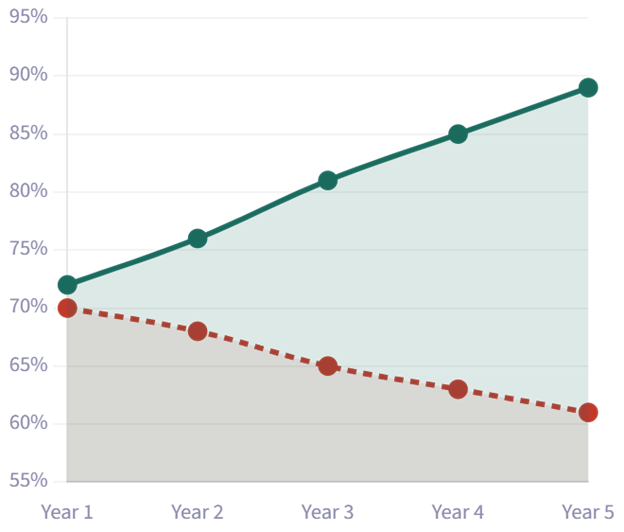
Source: SHRM “Talent Development Benchmark Report”
The landscape of work is undergoing a fundamental transformation. As artificial intelligence and machine learning automate complex analytical and technical duties, the uniquely human aspects of work will become an organisation’s ultimate competitive advantage.
In a distributed, hybrid, or remote work environment, physical proximity no longer binds teams together. The cohesion of modern workforces rests entirely on digital empathy, transparent communication, and psychological safety. Organisations that proactively build, evaluate, and reward soft skills today will cultivate the resilient, engaged, and fiercely loyal workforce required to thrive tomorrow.
Conclusion
Soft skills are no longer optional extras; they are strategic, bottom-line-driving assets critical to retaining top talent. While competitive compensation attracts employees, only a healthy, communicative, and emotionally intelligent culture keeps them.
Organisations that intentionally embed soft skills into their hiring, training, leadership development, and performance management systems are better positioned to build engaged, resilient, and high-performing workforces.
Proten International stands ready to bridge this gap by systematically integrating soft skills into the training curriculum, recruiting, elevating their importance in performance management, and tracking their correlation with employee tenure to build a resilient workforce and drive financial returns.Contact us today to begin building a more resilient, people-driven, and highly engaged workforce.