Ever notice how folks from different age groups in the workplace sometimes seem like they’re speaking entirely different languages? In today’s dynamic global workforce, organisations face a unique opportunity and challenge: managing employees from multiple generations simultaneously. For the first time in history, Generation X, Millennials, and Generation Z are working side by side in significant numbers, each bringing distinct experiences, values, and operational preferences shaped by their formative years.
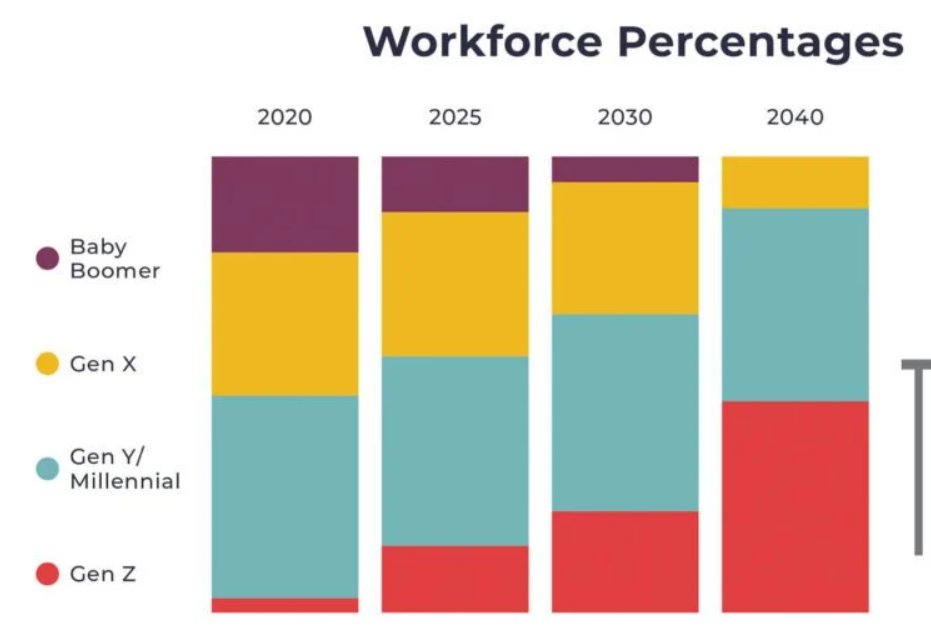
Source: Census Bureau
This resource explores how businesses can streamline processes to unlock the full potential of these cohorts. By adapting processes thoughtfully, companies can reduce friction, boost productivity, and foster inclusive cultures that drive sustainable growth.
Understanding the Generations: Key Characteristics and Operational Preferences
Effective multi-generational management begins with a clear appreciation of each cohort’s defining traits. These are not rigid stereotypes but evidence-based patterns drawn from surveys and demographic data.
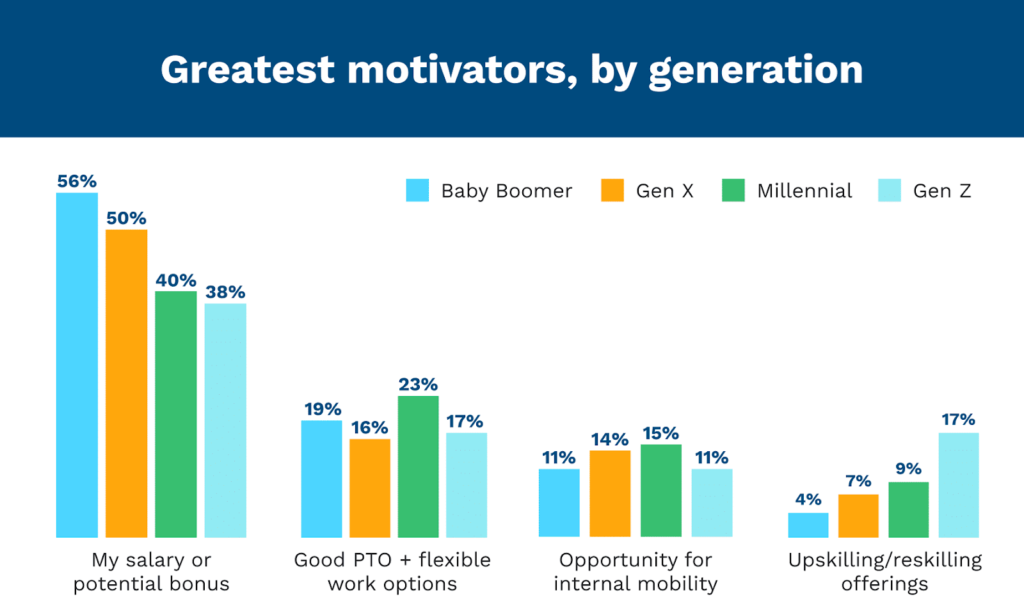
Source: Lever
Generation X (born approximately 1965–1980)
Often described as the “bridge” generation, Gen Xers are independent, self-reliant, and pragmatic. In Nigeria, they form a smaller but influential segment of the population (around 9.2%) and frequently occupy senior leadership and middle-management roles in sectors such as banking, oil and gas, and public administration. Globally, they continue to hold a disproportionate share of leadership positions despite representing a shrinking portion of the workforce.
- Autonomy and work-life balance as core motivators: Gen Xers value clear boundaries between professional and personal life and prefer processes that grant them freedom to deliver results without micromanagement. They are motivated by outcomes rather than constant oversight, reflecting their upbringing during economic uncertainty and rapid technological shifts in the 1980s and 1990s.
- Efficient, flexible communication: They favour whichever channel is most practical face-to-face meetings, phone calls, or concise e-mails over constant digital chatter. This preference stems from a worldview that prizes efficiency and scepticism toward unnecessary bureaucracy.
- Entrepreneurial spirit and resilience: Many Gen Xers exhibit strong self-reliance and adaptability, making them natural mentors and stabilising forces in organisations. In Nigerian firms, their institutional knowledge often anchors traditional structures even as younger employees push for innovation.
Millennials (born 1981–1996)
This cohort remains one of the largest in the global workforce and, combined with Gen Z, already constitutes the majority in many Nigerian organisations. They came of age during the rise of the internet, the global financial crisis, and increased emphasis on social responsibility.
- Purpose, collaboration, and rapid growth: Millennials seek meaningful work aligned with organisational values and societal impact. They thrive in collaborative environments that emphasise teamwork and continuous professional development, often viewing career progression as a series of purposeful milestones rather than linear ladders.
- Value-driven decision-making: A high proportion expect their employer’s mission to reflect their personal beliefs; recent data show nearly half prioritise companies that align with their values. In Nigeria’s fintech and creative industries, Millennials frequently drive initiatives around sustainability and social entrepreneurship.
- Technology as an enabler, not an end: Comfortable with digital tools but less immersed than Gen Z, they appreciate collaborative platforms that facilitate knowledge-sharing and feedback.
Generation Z (born 1997–2012)
True digital natives raised amid smartphones, social media, and global crises such as the COVID-19 pandemic, Gen Z represents the fastest-growing segment of the Nigerian and global workforce. In Nigeria, they account for approximately 25.8% of the population, and together with Millennials, they exceed 50%, creating a youth-dominated labour market. Globally, Gen Z already makes up around 18% of the workforce in advanced economies and is projected to reach 30% by 2030.
- Diversity, inclusion, and work-life balance: Passionate about fresh perspectives and equity, Gen Z prioritises environments that celebrate difference and support mental well-being. They demand flexibility and view work as one part of a balanced life rather than its central focus.
- Purpose and autonomy over traditional loyalty: Surveys indicate that 89% of Gen Z (and 92% of Millennials) consider a sense of purpose critical to job satisfaction. They are pragmatic, growth-oriented, and willing to change roles quickly, averaging just 1.1 years in a position, if progression or meaning is lacking.
- Seamless technology integration and innovation: Having never known a world without the internet, they expect intuitive digital tools and are quick to adopt emerging technologies.
These preferences create a rich tapestry but also potential friction points: Gen X’s preference for autonomy may clash with Millennials’ desire for collaborative feedback, while Gen Z’s rapid pace and digital fluency can challenge established hierarchies.
Scenario Analysis: Challenges and Opportunities in Multi-Generational Workforces
The demographic reality in Nigeria amplifies both risks and rewards. With a median age of just 18.1 years and millions of young people entering the labour market annually, organisations must harness the energy of Gen Z and Millennials while retaining Gen X institutional memory.
Traditional sectors such as government and manufacturing, dominated by Gen X leaders, risk losing talent if processes remain rigid and hierarchical; cultural norms that emphasise respect for elders can inadvertently stifle younger voices.
Globally, the picture is similar but broader. The rise of hybrid work, GenAI, and economic uncertainty has intensified calls for adaptability. Challenges include mismatched communication styles (e.g., Gen Z’s preference for instant messaging versus Gen X’s preference for direct conversation), differing expectations around feedback frequency, and varying attitudes toward loyalty versus growth.
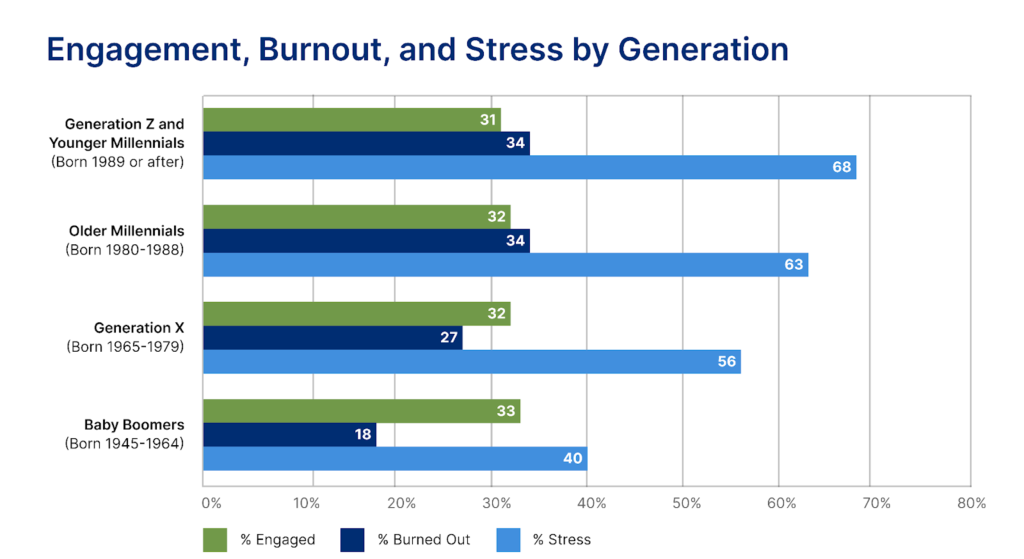
Source: Gallup
Opportunities abound, however: reverse mentoring, where Gen Z teaches digital skills to Gen X leaders, can accelerate innovation, while cross-generational collaboration fosters resilience and creativity. In multinationals operating in Nigeria, such as those in banking or telecommunications, successful firms are already seeing productivity gains by blending local cultural respect with global best practices in flexibility and purpose-driven work.
Streamlining Processes: Practical Insights to Maximise Performance
To pivot effectively, organisations must redesign core processes with generational nuance. The goal is not one-size-fits-all but targeted adaptations that create a unified, high-performing culture. Below are evidence-based strategies organised by key process areas.
Communication and Collaboration
- Streamline channels by offering a hybrid toolkit: Instant digital platforms (Slack, WhatsApp) for Gen Z’s preference for speed and visual content, collaborative project tools (Microsoft Teams, Google Workspace) for Millennials’ teamwork focus, and periodic in-person or phone check-ins for Gen X’s efficiency-driven style.
- Implement structured yet flexible feedback loops: Quarterly town halls combined with anonymous digital pulse surveys ensure Gen Z feels heard on issues, Millennials receive collaborative input, and Gen X maintains autonomy without constant interruption.
Training and Development
- Adopt modular, personalised learning paths: Gen Z benefits from bite-sized, mobile-first modules on emerging technologies, while Millennials engage with mentorship programmes tied to purpose and rapid promotion tracks. Gen X leaders thrive on practical, results-oriented workshops.
- Introduce reverse-mentoring schemes: Pairing Gen Z “digital natives” with Gen X managers accelerates technology adoption and reduces generational silos.
Performance Management and Feedback
- Shift from annual reviews to continuous, multi-modal systems: Real-time digital dashboards satisfy Gen Z’s need for transparency; collaborative 360-degree feedback appeals to Millennials; and outcome-focused evaluations preserve Gen X motivation.
- Tie metrics to shared values: Incorporate purpose-driven KPIs while allowing autonomy in delivery.
Leadership and Mentorship
- Promote inclusive leadership models and structured mentoring circles.
- Develop succession pipelines that blend experience with innovation.
Conclusion
With such a wide range of ages and experiences in the workplace, there are bound to be generational differences. However, many organisations benefit greatly from having a multigenerational workforce. The key is learning how to navigate generational differences in the era of non-traditional work.
The multi-generational pivot is not merely an HR exercise; it is a strategic imperative for competitiveness in Nigeria’s youthful economy and the global talent marketplace. By recognising Gen X’s independence, Millennials’ collaborative, purpose-seeking approach, and Gen Z’s digital-native drive for diversity and balance, organisations can streamline processes to create environments where every generation thrives.
How Proten International Can Help
Struggling to align diverse teams, improve productivity, or attract the right talent? Proten International provides end-to-end HR solutions, from recruitment and workforce management to capacity-building training and strategic HR advisory, designed to help your organisation perform at its best. Get in touch today to transform your people into your greatest competitive advantage.