Many modern workplaces are drowning in well-intentioned but inefficient processes. Emails pile up, reports are duplicated across departments, and approvals snake through multiple layers of hierarchy. The result? Knowledge workers spend the majority of their time on “work about work” rather than the skilled tasks they were hired to perform.
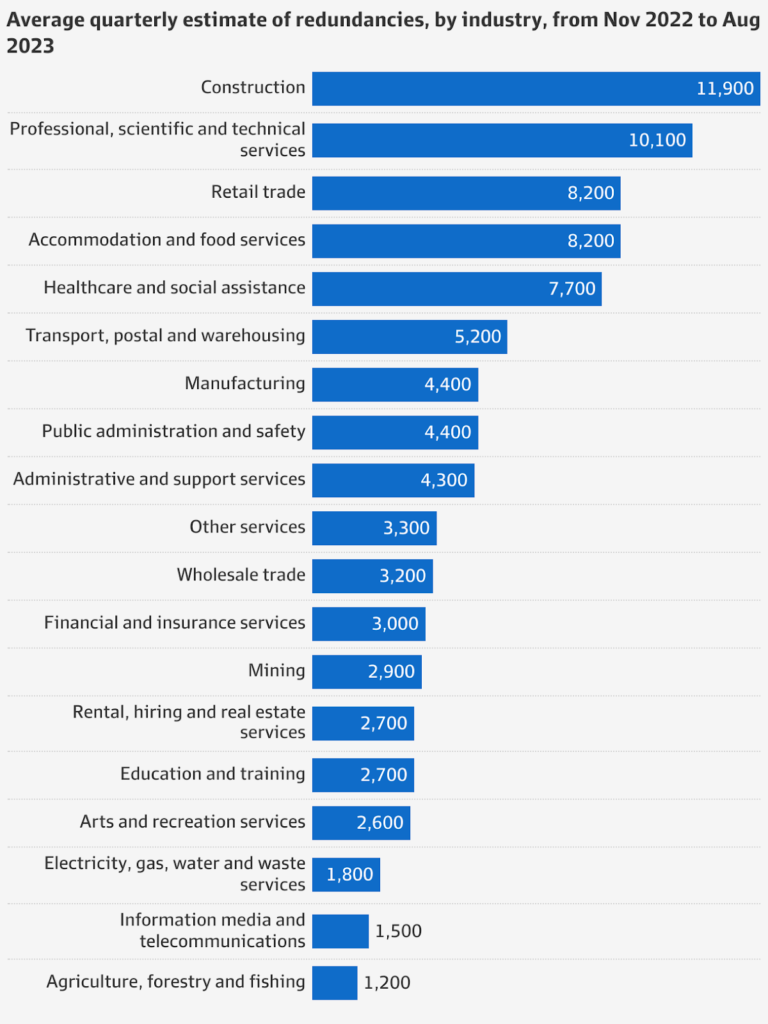
Source: ABS
The Cognitive Surplus Strategy reframes this challenge. Instead of accepting redundancy as inevitable, organisations deliberately free up mental and temporal capacity (the cognitive surplus) that employees can redirect toward innovation, customer service, and strategic initiatives. By streamlining processes, organisations can compete more effectively on the global stage while retaining top talent who increasingly demand meaningful, high-impact roles.
The Hidden Cost of Redundancy
Redundancy manifests in many forms: duplicated data entry, excessive status meetings, multiple versions of the same report, and bureaucratic approval chains. These are not minor inconveniences; they erode organisational capacity at scale.
Globally, knowledge workers spend 60% of their time on “work about work”: activities such as chasing updates, searching for information, switching between applications, and attending unnecessary meetings. Over a year, the average knowledge worker loses 209 hours to duplicative work and 352 hours talking about work rather than doing it.
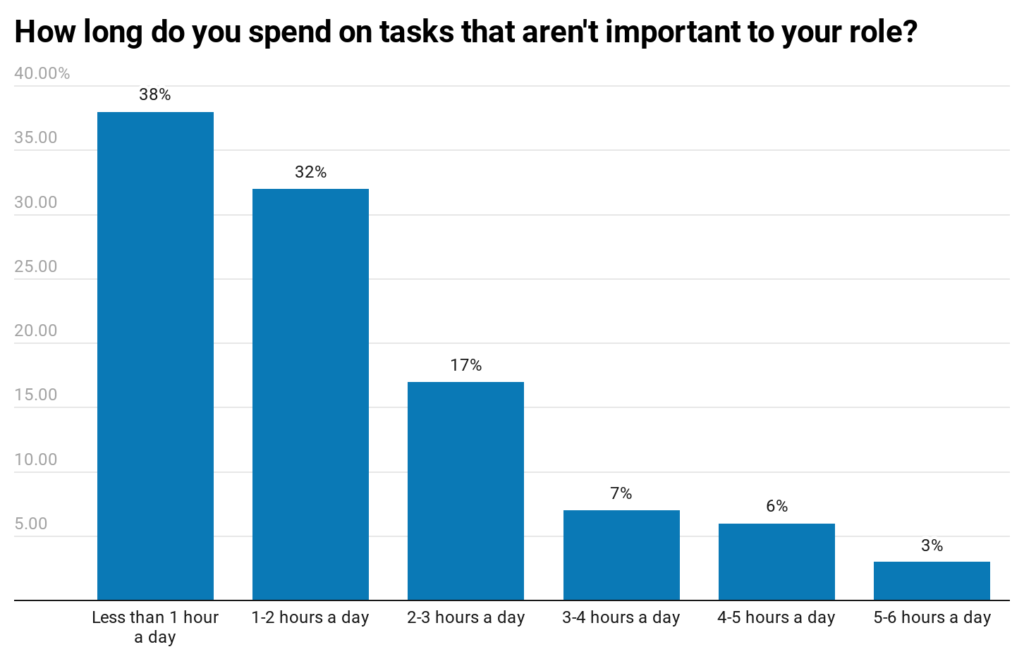
Source: Enterprise Apps Today
A 2025 Deloitte survey of nearly 10,000 business and HR leaders across 93 countries found that 41% of employees’ daily time is spent on work that does not contribute to organisational value. Earlier McKinsey research showed interaction workers devoting nearly 20% of their week to searching for internal information or tracking down colleagues, and 28% to managing email, activities that social and digital tools can dramatically reduce.
The result is chronic underutilisation of talent: skilled graduates spend hours on manual reconciliation or waiting for sign-offs instead of driving growth. Poor communication and duplicated efforts further compound the problem, with organisations losing thousands of productive hours annually. The cumulative cost is staggering: lost innovation, higher operational expenses, employee burnout, and reduced competitiveness. Without intervention, these redundancies will continue to drain the very cognitive resources businesses need to navigate economic volatility and digital disruption.
Defining Cognitive Surplus in the Modern Workplace
The term cognitive surplus was originally popularised by Clay Shirky to describe the collective free time and mental energy available for collaborative online creation. In a business context, it refers to the untapped reservoir of focus, creativity, and strategic thinking that employees possess once redundant tasks are eliminated.
When routine duplication is removed, employees gain more than extra hours; they gain mental bandwidth. Cognitive load decreases, decision-making accelerates, and discretionary effort increases. The surplus becomes a strategic asset: time for deep work, cross-functional collaboration, customer engagement, and innovation.
Organisations that deliberately create cognitive surplus move from a culture of busyness to one of impact. They stop measuring success by hours logged or emails sent and start measuring outcomes delivered.
Core Principles of the Cognitive Surplus Strategy
The strategy rests on four foundational principles:
- Visibility first: Map every process end-to-end to expose hidden duplication.
- Value second: Ruthlessly question whether each step contributes directly to customer or organisational outcomes.
- Automation third: Deploy digital tools and AI to handle repetitive elements.
- Slack fourth: Intentionally protect freed capacity for high-value work rather than filling it with new low-value tasks.
Step-by-Step Implementation Roadmap
Phase 1: Discovery
- Conduct process audits using value-stream mapping or employee time-tracking tools.
- Survey teams to identify the top five redundant activities (e.g., multiple reporting tools, repeated data entry, excessive CC emails).
- Engage cross-functional workshops to quantify time lost; some teams often surface approval bottlenecks here.
Phase 2: Prioritisation and Redesign
- Rank processes by time wasted versus business impact.
- Eliminate, simplify, or combine steps: consolidate three approval layers into one digital workflow.
- Introduce single-source-of-truth platforms (shared dashboards, integrated ERP or CRM systems) to end version-control chaos.
Phase 3: Automation and Tool Optimisation
- Deploy low-code/no-code tools, RPA, and AI assistants for routine tasks.
- Integrate existing systems to reduce switching between applications; a major time sink for local knowledge workers using multiple legacy platforms.
- Pilot AI-powered document search and summarisation to cut information-hunting time by up to 35%. (McKinsey)
Phase 4: Cultural Reinforcement and Slack Creation (Ongoing)
- Train leaders to protect cognitive surplus rather than immediately reassigning freed time.
- Introduce policies such as “no-meeting Wednesdays” or 20% buffer time for strategic projects.
- Redefine performance metrics around outcomes, not activity volume.
- Celebrate early wins to build momentum; organisations often see rapid engagement lifts when staff feel their time is respected.
Phase 5: Measurement and Continuous Reset
- Track capacity reclaimed through before-and-after time audits and productivity indices.
- Conduct annual work resets to prevent new redundancies from creeping in.
Benefits and Quantifiable Outcomes
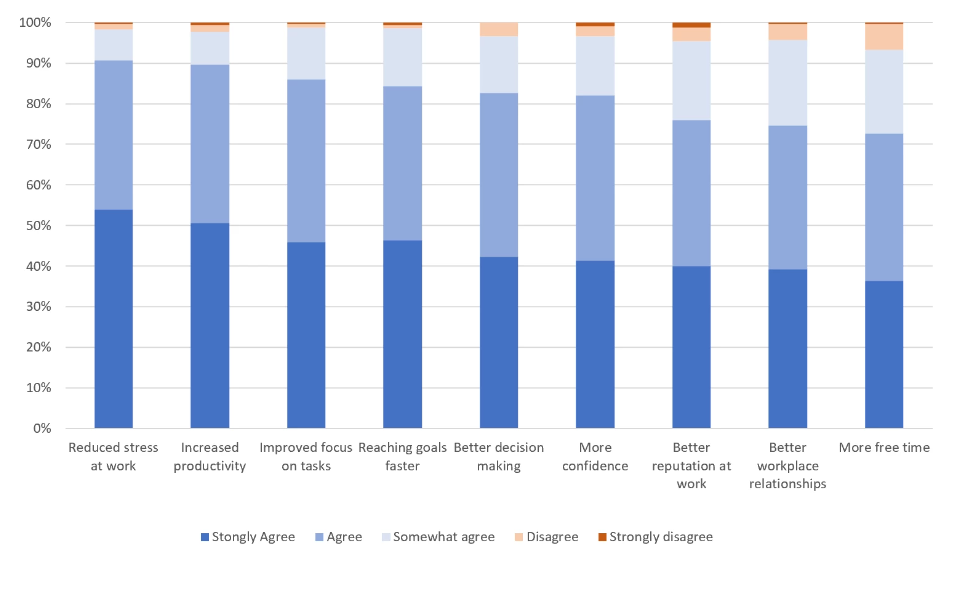
Source: Enterprise Apps Today
Organisations that reclaim capacity through this strategy realise multiple compounding benefits:
- Productivity and capacity: Equivalent of one extra productive day per employee per week without additional headcount.
- Cost efficiency: Reduced overtime, lower recruitment needs, and savings on tools through consolidation.
- Innovation and agility: Freed cognitive resources fuel new product development, process breakthroughs, and faster market response.
- Employee experience: Reduced burnout, higher engagement, and improved retention. Staff report greater job satisfaction when freed from duplication.
- Organisational resilience: Streamlined processes create buffers and reduce dependency on manual workarounds, particularly in Nigeria’s challenging infrastructure context.
Overcoming Challenges in Implementation
Nigerian organisations may encounter hurdles such as resistance to change, limited digital infrastructure, and initial investment constraints. These are surmountable:
- Start with high-visibility, low-disruption pilots to generate quick wins.
- Leverage affordable cloud-based tools and local fintech solutions familiar to your team.
- Partner with HR and change-management experts to address cultural concerns and communicate human benefits clearly.
- Use government digital-transformation incentives where available to offset technology costs.
- Leadership commitment is non-negotiable; executive modelling accelerates adoption.
Conclusion
The Cognitive Surplus Strategy is more than a process-improvement initiative; it is a fundamental reorientation toward human potential. By eliminating redundancy, organisations can reclaim 20% of workforce capacity and, more importantly, unlock creativity and strategic thinking that drive long-term success.
For Nigerian businesses and global enterprises operating in similar dynamic environments, the opportunity is clear. Talent is the ultimate competitive advantage, and organisations that free their people’s minds will outpace those trapped in outdated processes.
Proten International stands ready to support organisations on this journey through tailored audits, Lean Six Sigma training, digital-transformation advisory, and change-management expertise. The time to act is now; every redundant process eliminated today creates cognitive surplus for tomorrow’s growth.
Contact us today to get started.