The narrative of Nigerian business growth is shifting from resource dependence to human capital optimisation. Organisations are grappling with a dual challenge: a scarcity of “job-ready” talent and the rapid obsolescence of existing skills. Competent human capital remains the single greatest driver of competitive advantage, yet a significant skills gap—exacerbated by systemic educational disconnects—threatens sustainable growth.
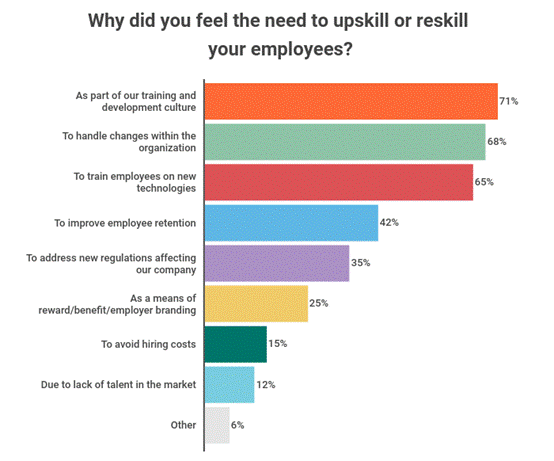
Source: Talentlms
The World Economic Forum’s Future of Jobs Report 2025 poses a stark reality: 39% of core skills are expected to change by 2030. For Nigerian organisations, this is not just a future prediction but a current crisis. The disconnect between academic output and industry need is palpable; research indicates that 42.1% of academic curricula have not been reviewed in over six years, leading to a workforce that is often theoretically qualified but practically unprepared.
Organisations that fail to proactively manage this shift risk “human capital depreciation”, where their workforce becomes an anchor rather than a sail. This paper focuses on the “How”, moving beyond the rhetoric of the skills gap to actionable strategies that maximise human potential.
The Imperative: Why Alignment Matters Now
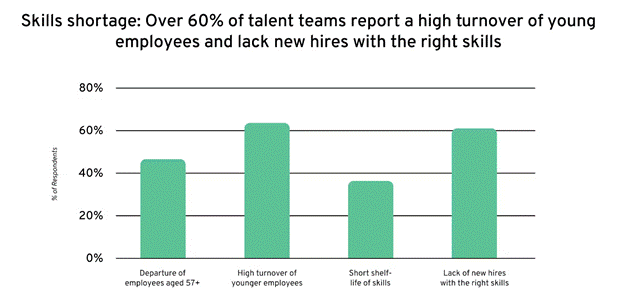
Source: 360learning
The cost of misalignment is quantifiable. A 2025 report cites that 65% of Nigerian employers identify skill gaps as the primary barrier to transformation. This gap is most acute in high-growth sectors:
- Technology: Shortages in data science, cybersecurity, and software engineering.
- Manufacturing & Agriculture: A lack of technical proficiency in automated systems and sustainable practices.
This misalignment stems from a systemic root cause: the “Ivory Tower” syndrome in education, in which academic standards are driven by regulatory compliance rather than employer feedback. Consequently, 85% of graduates lack basic digital competencies, and youth unemployment remains stubbornly high. When employees lack the skills to execute strategy, organisations face increased recruitment costs, lower morale, and significant productivity leakages.
Alignment is not merely about training; it is about ensuring that every ounce of human effort contributes directly to the organisation’s strategic goals.
Strategic Framework 1: Upskilling
The Evolutionary Approach
Upskilling is the process of deepening an employee’s existing capabilities to enhance performance in their current role. It is an evolutionary strategy designed to keep pace with incremental changes, such as new software updates, regulatory changes, or advanced management techniques.
The Nigerian Use Case:
In Nigeria’s financial and e-commerce sectors, upskilling is critical for retention. With the high cost of recruiting “ready-made” talent, it is often more cost-effective to train a mid-level accountant in data analytics than to hire a new data scientist.
Execution Roadmap:
- Competency Mapping: Conduct a granular audit of current skills versus future requirements.
- Micro-Learning Integration: Utilise platforms for bite-sized learning that fit into the flow of work.
- Mentorship: Pair junior staff with senior executives to transfer tacit knowledge.
Organisational Impact:
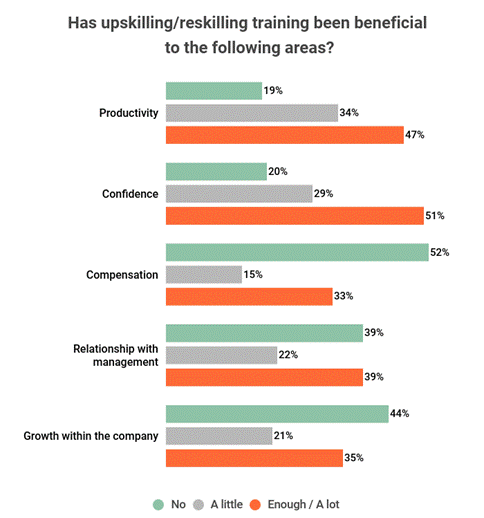
Organisations that prioritise upskilling report productivity boosts of 10–20%. Furthermore, in a high-turnover market, it signals investment in the employee, fostering loyalty.
Strategic Framework 2: Reskilling
The Revolutionary Approach
Reskilling is the process of training employees with entirely new skills to move them into different roles. This is a revolutionary strategy used when a role becomes obsolete due to automation or strategic pivoting.
The Nigerian Use Case:
As the global energy transition impacts Nigeria’s oil and gas sector, engineers and technicians will need to be reskilled for roles in renewable energy and project management. Similarly, administrative staff whose roles are automated by AI can be reskilled into customer experience or quality assurance roles.
Execution Roadmap:
- Identify “At-Risk” Roles: Use workforce analytics to predict which jobs will be displaced by technology in 18-24 months.
- Adjacent Skill Mapping: Identify employees with “transferable skills” (e.g., critical thinking, problem-solving) who can pivot.
- Immersive Bootcamps: Unlike upskilling, reskilling requires intensive, dedicated training periods (apprenticeships or simulations).
Organisational Impact:
According to a report by PwC, reskilling can save up to 70% on hiring costs while preserving institutional memory and culture. The Dangote Refinery example, where Nigerian graduates were sent to India for specialised training, demonstrates how reskilling bridges the gap between local talent availability and specialised industrial needs.
Strategic Framework 3: Workforce Redesign
The Structural Approach
Workforce redesign is not about changing the person, but changing the job. It involves deconstructing jobs into tasks and restructuring them to optimise efficiency, often by integrating technology or redistributing responsibilities.
The Nigerian Use Case:
Redesigning workflows to flatten hierarchies and empower frontline workers can bypass these bottlenecks. In healthcare and retail, redesigning roles to allow AI to handle scheduling and inventory frees humans to focus on patient care and customer service.
Execution Roadmap:
- Job Deconstruction: Break roles down into individual tasks.
- Automation Analysis: Determine which tasks can be automated and which require “human touch.”
- Role Reconstitution: Create new, hybrid roles that combine high-value human tasks with technology management.
Organisational Impact:
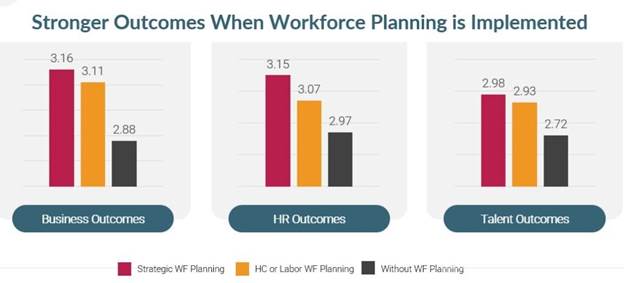
Source: Sapient Insights
Deloitte notes that redesigning for outcomes creates fluid systems resilient to change. By removing low-value repetitive tasks, employee engagement rises, and productivity can increase by 15–25%.
Decision Matrix: Making the Call
How do leaders choose? The decision depends on the urgency of the need and the availability of talent.
| Variable | Upskill | Reskill | Redesign |
| Objective | Improve current performance | Fill new/vacant roles internally | Fix structural inefficiencies |
| Timeline | Short to Medium Term | Medium to Long Term | Immediate Impact |
| Cost | Low to Moderate | Moderate to High | High (Time/Consulting) |
| Disruption | Minimal | Moderate | Significant |
| Trigger | Technology Update | Role Obsolescence | Process Failure/Automation |
A hybrid approach is often best. For example, a bank might redesign its customer service workflow (automating queries), reskill displaced tellers into financial advisors, and upskill existing advisors on new wealth management software.
Conclusion
By taking ownership of the talent pipeline through deliberate upskilling, targeted reskilling, and intelligent workforce redesign, organisations can significantly reduce their exposure to economic shocks. In a world defined by rapid technological shifts, demographic pressures, and capital volatility, resilience will not come from cost-cutting alone, but from capability-building. Organisations that continuously evolve the skills architecture of their workforce will be better positioned to absorb disruption, respond to new market demands, and sustain long-term competitiveness.
Source: Talentlms
Ultimately, the future belongs to organisations that reject the idea of labour as a fixed cost and instead treat their workforce as a renewable asset: one that can be refined, redeployed, and reimagined over time.
Partner with Us
Proten International partners with organisations to future-proof their workforce through end-to-end solutions in upskilling and reskilling, skills-based workforce planning, and workforce design aligned to business strategy. Whether you are seeking to close critical skills gaps, redesign roles, or build internal talent pipelines that reduce dependency on external hiring, Proten International provides the insight, frameworks, and execution support to make it happen. Contact us today to get started.