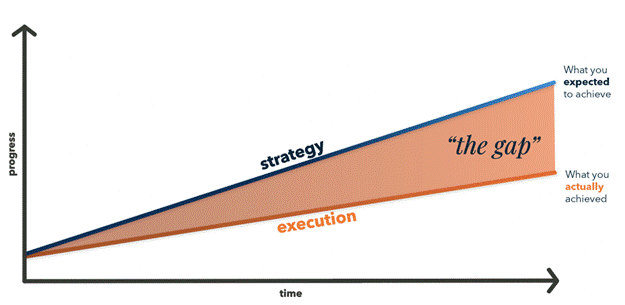
Despite sophisticated strategic planning processes, many organisations fail to achieve their objectives because of a fundamental disconnect between the boardroom and the frontline. Executive teams invest months developing five-year plans, yet operational outcomes frequently fall short of projections. Research indicates that only 32% of executives believe their current performance management systems enable high-quality talent decisions. This “execution gap” emerges when employees either do not understand how their daily tasks contribute to the company’s long-term vision or are measured against metrics that do not reflect strategic priorities.
Source: The OKR Group
The problem is not always poor strategy; it is often poor translation. When strategic goals are not decomposed into operational realities, they remain abstract aspirations rather than actionable commitments.
In Nigeria, this gap is exacerbated by macroeconomic shifts, including subsidy removals, exchange rate fluctuations, and persistent inflation. These dynamics necessitate rapid pivots in corporate strategy. However, individual work plans, KPIs, and incentive systems often remain static, creating misalignment between what the business needs now and what employees are being measured on. In such an environment, agility without alignment leads to confusion rather than resilience.
Strategic Clarity: The Foundation of Performance
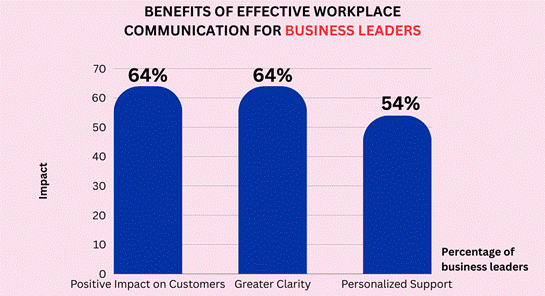
Before performance can be managed, strategy must be clarified. A strategy that is not communicated effectively is merely a document. Strategic clarity transforms vision into operational direction.
The Role of Leadership in Strategic Communication
Clarity begins with Strategic Communication. Leaders must move beyond “nominal” targets to “real” objectives. For a Nigerian firm, a strategy to “increase revenue by 20%” might be a failure if inflation is at 28%. Real growth must be measured in purchasing power, profitability, and market share, not just top-line expansion.
Source: Notta
Effective strategic clarity involves defining:
- The ‘Why’: The core purpose, value proposition, and competitive advantage. Why does the organisation exist beyond profit? What unique capability differentiates it in the market?
- The ‘What’: Quantifiable milestones for the next 12–24 months. These must reflect economic realities, regulatory trends, and competitive positioning.
- The ‘How’: The specific behaviours, capabilities, and competencies required from the workforce to deliver on these objectives.
Clarity also requires repetition. Strategy must be embedded in town halls, departmental briefings, onboarding processes, and managerial conversations. When employees can articulate how their work supports strategic outcomes, alignment becomes cultural rather than procedural.
Converting Organisational Goals into Measurable KPIs
The translation of high-level strategy into individual action requires a structured cascading process. The most effective framework remains a hybrid of the Balanced Scorecard (BSC) and Objectives and Key Results (OKRs). The Balanced Scorecard ensures that financial metrics are balanced with customer, internal process, and learning perspectives, while OKRs introduce focus and agility.
The KPI Cascade Process
- Define Top-Level Objectives: e.g., “Achieve market leadership in the Nigerian FinTech sector.”
- Identify Strategic Drivers: These could include “Customer Acquisition Cost (CAC) reduction,” “Platform Uptime,” or “Regulatory Compliance Excellence.”
- Departmental Outcomes: The Marketing department adopts the “CAC reduction” goal; the Technology department focuses on “Platform Uptime.”
- Individual KPIs: A Digital Marketer’s KPI becomes “Reduce cost-per-lead on LinkedIn by 15% by Q3,” directly contributing to CAC reduction.
This cascading process ensures vertical alignment, from corporate vision to individual deliverables.
Best Practices for KPI Design
Source: ChartExpo
- Real vs. Nominal Metrics: In volatile markets like Nigeria, KPIs should reflect economic context. Measuring Operating Cash Flow, margin resilience, and cost efficiency may be more meaningful than focusing solely on revenue growth.
- Leading vs. Lagging Indicators: Do not only measure what happened (Sales Revenue); measure what will happen (Sales Pipeline Growth, Customer Retention Rates, Brand Engagement Metrics).
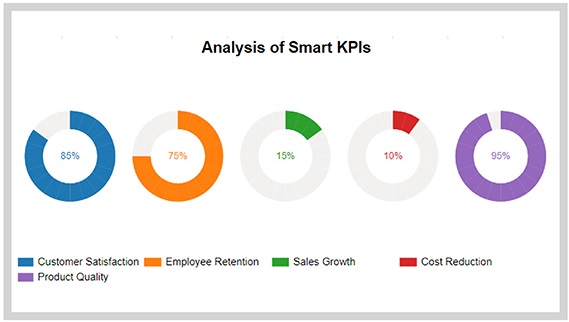
- SMART Criteria: Every KPI must be Specific, Measurable, Achievable, Relevant, and Time-bound.
- Behavioural Alignment: KPIs should incentivise behaviours that reinforce strategic culture, such as collaboration, innovation, and customer-centricity.
When KPIs are poorly designed, they drive activity rather than impact. When well designed, they convert strategy into daily discipline.
Designing Modern Appraisal Systems
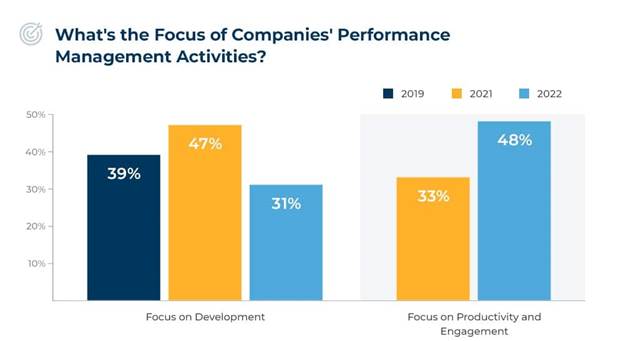
Traditional annual performance reviews are increasingly viewed as retrospective exercises with limited influence on future outcomes. Currently, the trend has shifted toward Agile Performance Management; dynamic systems that prioritise continuous dialogue, developmental feedback, and data-driven insights.
Key Features of Effective Appraisal Systems
Source: ClearReview
- Continuous Feedback: According to H. Pierson, research indicates that 80% of employees who receive weekly feedback feel fully engaged. Modern systems facilitate real-time coaching, ensuring that performance gaps are corrected promptly rather than reviewed months later.
- 360-Degree Insights: Peer reviews and cross-functional feedback are essential for assessing soft skills such as collaboration, adaptability, and leadership presence; competencies that are increasingly critical in hybrid and remote environments.
- Developmental Focus: Modern appraisal systems link performance outcomes to learning pathways, ensuring that feedback leads to structured skill development.
Challenges and Opportunities in the Nigerian Context
Nigeria presents a unique and complex environment for performance alignment.
Talent Retention
With skilled professionals increasingly accessing global remote work opportunities, compensation alone is insufficient as a retention tool. Performance systems that integrate career progression, upskilling pathways, and meaningful developmental feedback enhance organisational loyalty.
Digital Transformation
Technology platforms are enabling Nigerian firms to digitise their performance management systems, enhancing transparency, tracking, and merit-based reward structures. Digitalisation reduces bias, improves documentation, and supports data-backed decision-making.
Agility in Volatility
Given fluctuating exchange rates and inflation, performance systems must incorporate quarterly “re-basing” of targets. Rigid annual KPIs can demotivate employees when macroeconomic shifts render targets unrealistic. Agile systems allow recalibration without sacrificing accountability.
Cultural Considerations
Performance alignment must also consider cultural dynamics. In many organisations, hierarchical communication structures may inhibit upward feedback. Encouraging psychological safety and open dialogue strengthens alignment and innovation.
Conclusion
Aligning individual performance with business strategy is not a one-off project but a cultural commitment. It requires absolute clarity from leadership, a disciplined approach to KPI cascading, and a modern, data-driven appraisal system that prioritises continuous growth over annual policing.
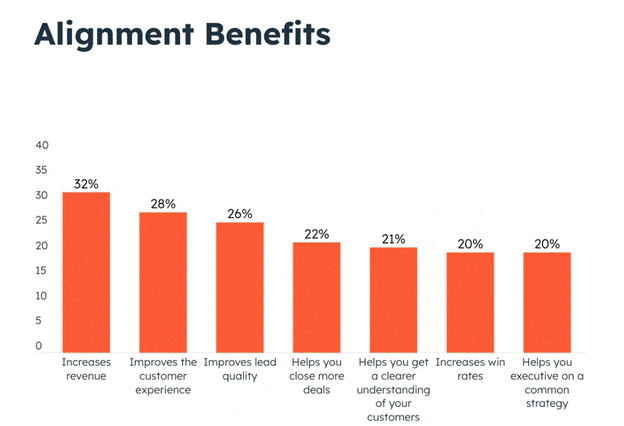
For organisations, this alignment serves as both a growth accelerator and a protective shield against economic volatility and talent attrition. When employees understand not just what they are doing, but why they are doing it, and how it connects to measurable business outcomes, strategy moves from PowerPoint slides into operational reality.
Source: HubSpot
Sustainable growth in this era will belong to organisations that close the strategy-execution gap; not through rhetoric, but through systems.
Call to Action
Bridging the strategy-execution gap requires more than intention; it demands structure, expertise, and disciplined implementation. Proten International partners with organisations to translate business strategy into measurable performance frameworks that drive sustainable results. Through our HR Advisory Services, we support clients in clarifying strategic priorities, designing cascading KPI architectures, and implementing agile performance management systems tailored to their operational realities.
If your organisation is ready to move from strategy on paper to strategy in action, Proten International is equipped to guide that transformation. Let us help you build a performance ecosystem where clarity drives execution, and execution drives results.