Zenith Bank Plc, one of Nigeria’s leading financial institutions and a Tier-1 bank with international operations, has achieved remarkable growth through a structured performance management system (PMS) that emphasises clarity of objectives, regular feedback, talent development, and performance-linked rewards. Operating in a highly regulated, capital-intensive, and increasingly digital financial services sector, the bank has built a system that ensures individual accountability aligns tightly with institutional ambition.
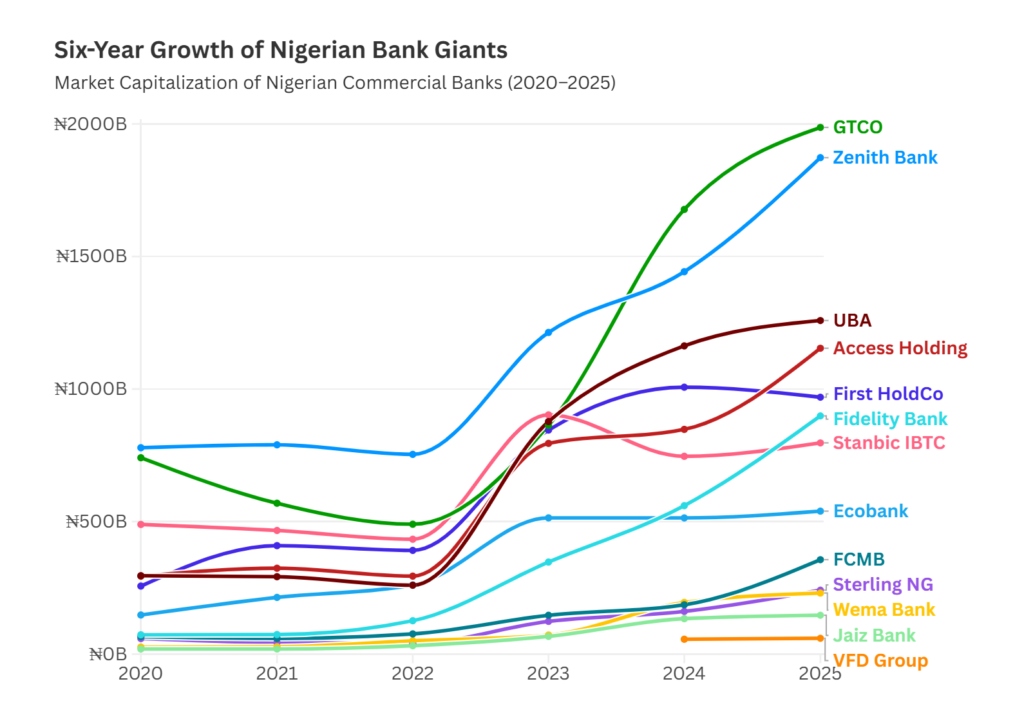
Source: NGX
This case study examines how Zenith Bank’s PMS aligns individual and organisational goals, fosters employee productivity, and supports sustained business expansion. The system’s integration with corporate governance, training investments, digital transformation, and remuneration policies provides valuable lessons for organisations seeking to balance employee engagement with strategic objectives in emerging markets.
Company Background
Founded in 1990, Zenith Bank Plc began operations as a commercial bank and rapidly expanded to become one of Africa’s largest by Tier-1 capital. From its early positioning as a technology-forward institution in Nigeria’s banking consolidation era, the bank differentiated itself through disciplined risk management, strong capital buffers, and a performance-driven culture.
Its core pillars (people, technology, and service) underpin a customer-centric model that has consistently delivered superior results. By the end of 2023, Zenith Bank reported gross earnings of ₦2,131.8 billion (up 125% year-on-year), and a profit before tax of ₦796 billion (180% growth).
These achievements reflect a conservative yet innovative business model supported by a motivated workforce of over 9,000 employees (2024 average). The strategic alignment between workforce capability and financial ambition underscores the importance of its performance management architecture.
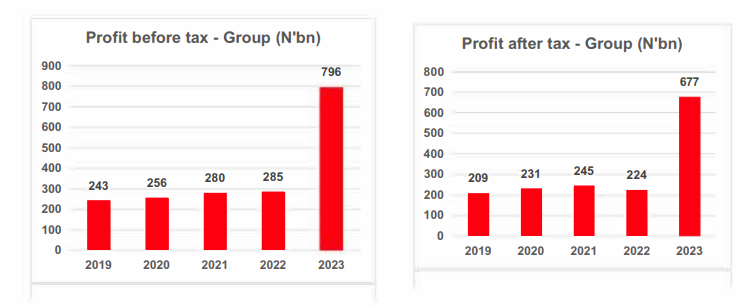
Source: Zenith Bank
Performance Management System (PMS) at Zenith Bank
Zenith Bank’s PMS is embedded in its corporate governance structure and operational strategy, rather than functioning as a standalone HR activity. The Board Governance, Nomination and Remuneration Committee establishes a formal framework that defines the scope, method, periodic reviews, and feedback mechanisms for performance management, ensuring accountability begins at the highest level.
At the executive level, key performance indicators (KPIs) for the Group Managing Director (GMD) and Executive Directors are agreed at the start of each financial year and directly linked to the bank’s strategic objectives, shareholder returns, regulatory compliance, and financial performance targets.
Performance evaluation occurs through structured appraisals that assess achievement against quantifiable targets such as asset growth, cost-to-income ratio optimisation, risk containment, digital adoption metrics, and customer acquisition performance. A recent study (2020–2025) at the Udoudoma Avenue branch in Uyo highlighted quarterly or periodic feedback sessions, standardisation of KPIs for objective evaluations, and a strong emphasis on monetary rewards as drivers of measurable productivity gains.
Board-level performance is independently appraised annually by external consultants (e.g., KPMG in 2023), covering structure, competencies, strategy oversight, and management stewardship. This top-down clarity cascades to all levels, ensuring alignment between individual roles and the bank’s pillars of people, technology, and service.
Key Components of the PMS
- Goal Setting and Clarity
Annual KPI setting for executives and cascading objectives for staff create transparency and shared direction. The strategic plan emphasises “continuous improvement” and “strategic readiness,” particularly critical in Nigeria’s inflationary and currency-volatile environment. Goals are communicated through formal documentation, town halls, digital dashboards, and performance scorecards, ensuring that every business unit understands how its targets connect to group-level objectives.
- Performance Appraisal and Feedback
Regular reviews combine self-assessment, managerial input, and data-driven metrics derived from operational dashboards. The 2025 Uyo study reported 65% of employees viewing the system as fair, with structured processes improving productivity. Periodic feedback mechanisms enable real-time adjustments, preventing prolonged underperformance and reinforcing a culture of accountability.
- Training and Development
Zenith invests substantially in capacity building, recognising that clarity without competence cannot drive growth. Over 262 programmes reached 1,807 employees in 2023 alone (13,429 hours of training).
Programmes span anti-money laundering (AML), combating financing of terrorism (CFT), board leadership, digital banking innovation, and human rights awareness. Human rights and safety training reached 73.36% of staff, reinforcing ESG commitments and ethical governance. These investments strengthen the bank’s digital transformation efforts and customer service excellence.
- Rewards and Compensation
Remuneration is performance-linked and strategically structured to incentivise productivity. Executive variable pay includes bonuses tied to both individual and bank-wide performance objectives. Staff benefits encompass competitive salaries, pensions, bonuses, promotions, and structured recognition systems.
- Succession Planning and Talent Management
The Board maintains robust succession policies for key roles, ensuring leadership continuity, evidenced by five smooth CEO transitions since inception. Diversity is prioritised, with a near 50:50 gender balance in the workforce and increasing female representation at senior levels (32% in top management in 2024). Structured talent reviews ensure high-potential employees are identified early and prepared for leadership pathways.
Impact on Clarity and Organisational Growth
1. Strategic Alignment and Goal Clarity
The PMS delivers clarity by translating high-level strategy into measurable and clearly communicated goals across the organisation. This structured alignment ensures that performance expectations are not ambiguous but directly connected to strategic priorities.
2. Performance Feedback and Measurable Outcomes
Through timely feedback and structured evaluation processes, employees are able to see a direct link between their effort and results. Studies consistently show strong positive correlations between structured performance management practices and employee productivity.
3. Workforce Capability and Business Expansion
This clarity translates directly into growth. A highly skilled and motivated workforce has enabled Zenith Bank Plc to lead in digital banking innovations, strengthen its service delivery architecture, and expand its international footprint. The bank achieved an average ROAE of 24% over the five years to 2023, with 2024 delivering further gains despite macroeconomic challenges. The consistent financial performance reflects the role of a well-aligned workforce in driving operational efficiency and revenue growth.
4. Innovation, Engagement, and Customer Growth
Low staff turnover and strong employee engagement further illustrate the impact of the PMS. Internal innovation initiatives such as Tech Fairs and hackathons encourage creative problem-solving and digital transformation, reinforcing a culture of continuous improvement. At the same time, a customer base exceeding 33 million demonstrates market confidence and sustained brand loyalty. Together, these outcomes highlight how a performance culture rooted in alignment and engagement contributes to both internal stability and external growth.
5. Resilience and Competitive Advantage
The bank’s ability to navigate economic cycles while posting record financial results underscores the PMS’s role in building organisational resilience and long-term competitive advantage. By embedding clarity, accountability, and continuous development into its operational model, Zenith sustains performance even in volatile environments, reinforcing its leadership position within the financial services sector.
Challenges and Mitigation Strategies
Challenges include economic pressures in Nigeria (currency volatility and inflation), potential appraisal biases (noted by 40% in the Uyo study), and scaling the system across a multi-jurisdictional workforce. Zenith mitigates these through centralised credit and risk processes, enhanced transparency in appraisals, annual governance reviews, and technology-enabled performance tracking systems.
Continuous policy reviews ensure alignment with CBN’s guidelines and global best practices. Research recommendations, such as aligning rewards with economic realities and updating training programmes, are already embedded in Zenith’s evolving HR strategy.
Conclusion
Zenith Bank’s performance management system exemplifies best practice in linking clarity to growth. By combining rigorous goal-setting, continuous development, fair rewards, and strong governance oversight, the bank has created a high-performance culture that drives employee engagement and extraordinary business outcomes.
In a competitive and dynamic sector, this integrated approach not only clarifies expectations but positions Zenith for sustained leadership across Africa and beyond. Organisations can draw valuable insights from Zenith’s model: invest in people, align incentives with strategy, and treat performance management as a strategic enabler rather than an administrative task.
Next Steps
At Proten International, we partner with organisations to design and implement performance management systems that drive clarity, accountability, and measurable growth.
As a next step, we would be pleased to schedule a discovery session to understand your current performance management structure, identify gaps, and co-develop a tailored framework that fits your organisational culture and strategic priorities. From system design to implementation support and leadership training, Proten International provides end-to-end guidance to help you build a high-performance culture that delivers sustainable results.
We look forward to partnering with you to transform performance into a strategic advantage.