The landscape of the Nigerian and global corporate world has moved beyond simple “check-the-box” exercises. As organisations and workforces increasingly prioritise flexibility, skill acquisition, and purpose over traditional tenure, the method by which we measure human value has reached a critical tipping point.
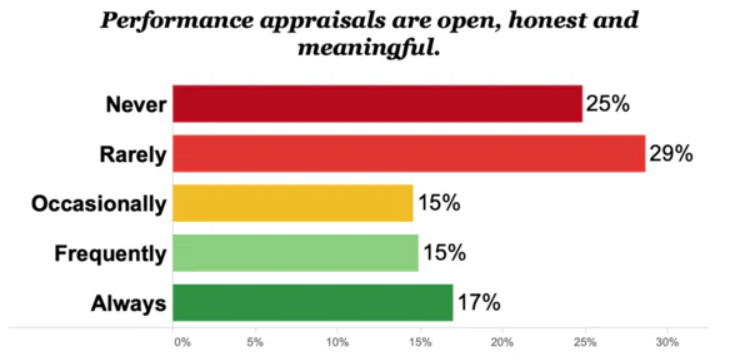
Source: LeadershipIQ
Across the globe, boards are asking harder questions: Are performance systems helping us build capability, or merely documenting compliance? Are managers coaching for tomorrow, or grading for yesterday?
This analysis explores the tension between the traditional Annual Performance Appraisal and the modern Continuous Performance Alignment (CPA) model, particularly within the Nigerian economic and regulatory context.
The Historical Anchor: Annual Performance Appraisals
The traditional annual appraisal is an “event-based” model. It typically involves a formal meeting once every twelve months where a manager and an employee review the previous year’s performance against a set of fixed Key Performance Indicators (KPIs) established at the start of the year.
This model was designed for a slower, more predictable corporate era, one where strategies changed gradually, and roles remained stable over long periods.
The Model in Practice
In this model, the process is heavily administrative. It serves as a primary vehicle for determining salary increments, bonuses, and promotions. The philosophy is retrospective; it is a post-mortem of what happened, rather than a strategy for what is coming.
Merits
- Standardisation: It provides a uniform framework across the entire organisation, making it easier for Human Resources to manage compensation cycles and talent mapping.
- Documentation: It creates a formal “paper trail” that is essential for legal compliance, particularly in highly regulated Nigerian sectors like banking and oil and gas.
- Structured Reflection: For some employees, it is the only time in the year they step back from daily operational demands to consider long-term career trajectory.
Demerits
- Recency Bias: Managers often struggle to recall performance from eleven months ago, leading them to judge an employee based on their output over the last three weeks.
- The “Anxiety Spike”: Because the stakes are tied to pay and job security, these meetings are often fraught with tension, stifling honest communication and developmental vulnerability.
- Operational Drag: Research indicates that for a firm with 100 employees, the annual review cycle can consume over 5,500 hours of productivity—essentially the work of three full-time employees dedicated solely to form-filling, moderation meetings, and documentation.
- Strategic Misalignment: KPIs set in January may become irrelevant by June, especially in an economy shaped by currency volatility, policy shifts, and rapid tech adoption.
The Modern Shift: Continuous Performance Alignment (CPA)
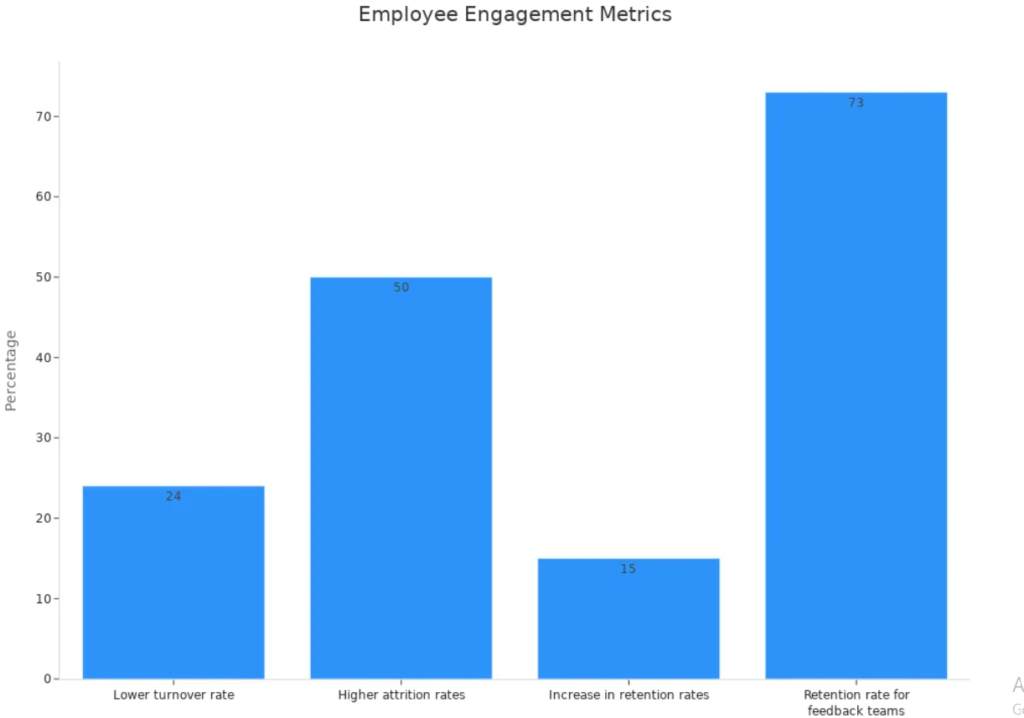
Source: Sobot (Why Continuous Feedback Systems Matter in Organisations)
Continuous Performance Alignment (CPA) represents a shift from “judging the past” to “enabling the future.” It is a fluid model built on real-time feedback, monthly or quarterly “check-ins”, and dynamic goal-setting. Rather than positioning performance as a once-a-year verdict, CPA treats it as an ongoing dialogue.
The Model in Practice
Instead of a single high-stakes meeting, CPA relies on frequent, low-stakes conversations. Goals are not set in stone in January; they are adjusted as market conditions change.
Merits
- Real-Time Course Correction: If an employee’s project is veering off track, they find out in February, not during a post-mortem in December.
- Increased Engagement: Global data shows that employees who receive weekly feedback are five times more likely to consider it meaningful and four times more likely to be engaged at work.
- Skill-Centric Growth: In a modern economy where skills are replacing certificates as the true measure of value, CPA allows managers to identify skill gaps immediately and provide micro-learning opportunities.
- Cultural Agility: CPA reinforces adaptability. Teams learn to pivot without fear because feedback is normalised rather than weaponised.
Demerits
- Management Fatigue: It requires managers to be “always on” mentors. Without proper training, “continuous feedback” can feel like “continuous micromanagement.”
- Information Oversaturation: In the absence of a structured system, the sheer volume of real-time data from Slack, Teams, and project management tools can overwhelm HR functions.
- Consistency Risk: Without calibration frameworks, different managers may apply different standards, creating perceived inequity.
Scenario Analysis: Contextual Application
To understand the efficacy of these models, we must look at how they manifest in the current Nigerian and global economic climate.
Scenario A: The Traditional Nigerian Conglomerate
Imagine a large manufacturing firm; it operates with a massive workforce and a rigid hierarchy. Transitioning to a continuous model is difficult because many middle managers view feedback as a tool for discipline rather than development. However, by sticking to the annual model, they are losing their top Gen Z and Millennial talent to rivals who offer more regular recognition. In this scenario, the annual appraisal acts as a barrier to agility, preventing the firm from pivoting its talent as quickly as the economy demands.
Scenario B: The Lagos-Based Fintech Startup
Conversely, a fintech firm in Yaba thrives on CPA. Because their product cycles are measured in weeks, an annual review would be obsolete before the ink dried. They use AI-driven tools to track real-time scores. This allows them to maintain a 14.9% lower turnover rate compared to traditional competitors. For them, the CPA model is not just a preference; it is a survival mechanism.
The Verdict: Why Continuous Alignment Wins
While the traditional appraisal offers structure, it is fundamentally ill-equipped for the modern workforce. The case for Continuous Performance Alignment is supported by three undeniable factors:
1. Agility
In an era where AI can automate up to 30% of work hours by 2030, roles change faster than job descriptions. Continuous alignment allows for the “soft pivots” necessary to stay relevant.
2. Retention
Organisations that have moved to continuous models report significant decreases in attrition. Employees today, particularly in Africa’s tech hubs, stay where they feel seen, coached, and developed.
3. Profitability
Companies that re-evaluate goals monthly are twice as likely to be in the top quartile of financial performance compared to those that do so annually. Strategy and execution remain tightly coupled.
The Hybrid Evolution: A Pragmatic Path Forward
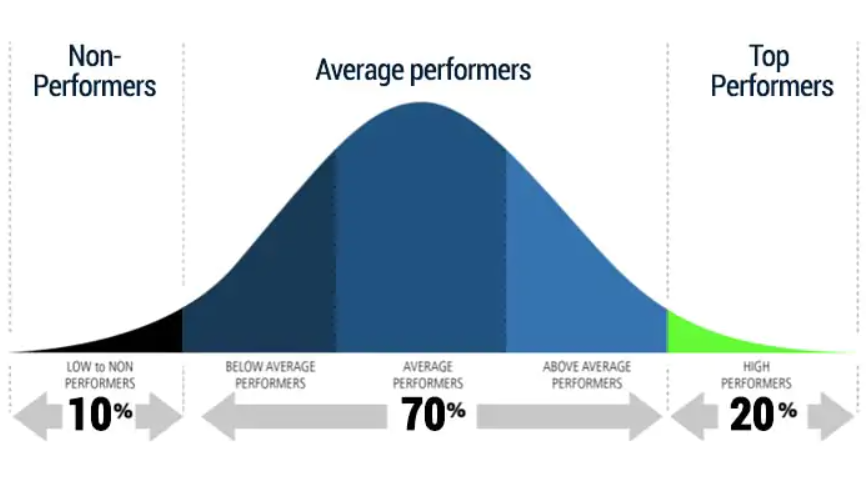
Source: Empxtrack (Bell Curve in Performance Appraisal)
The most effective approach for a modern firm is not total abandonment of structure, but evolution.
A Hybrid Model would involve:
· Maintaining a simplified year-end summary for compensation purposes
· Anchoring organisational culture in continuous, dialogue-driven alignment
· Training managers as coaches, not evaluators
· Leveraging digital tools to track progress without overwhelming HR
Performance management is no longer about filling forms. It is about sustaining relevance. Organisations that continue to treat performance as an annual ritual may find themselves compliant, but not competitive. Those that embrace Continuous Performance Alignment will not merely measure value. They will build it—every month.
At Proten International, we help organisations move beyond outdated, compliance-heavy appraisal systems to performance frameworks that actually drive growth, engagement, and profitability. If your organisation is ready to transform performance management from a yearly ritual into a competitive advantage, contact us and let’s start the conversation.