In the pursuit of high performance, many organisations unintentionally sabotage their own workforce. Cultures built on pressure, fear, bullying, and unrealistic workloads often deliver short-term output but ultimately erode long-term capability. Studies consistently show that toxic work environments increase voluntary turnover by up to 50%, suppress innovation by over 30%, and can reduce overall organisational performance by up to 40% due to disengagement, burnout, and impaired decision-making (MIT Sloan Management Review).
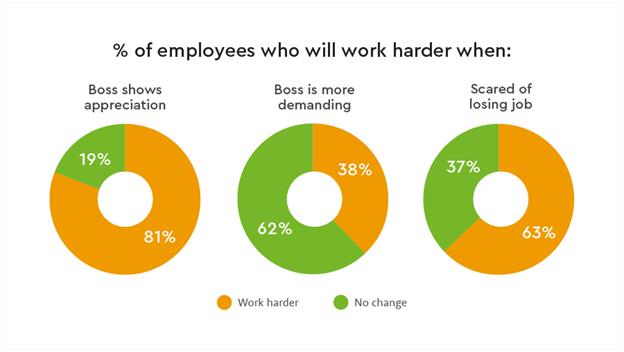
Source: EFX
Yet the dilemma persists: leaders want higher productivity, faster execution, and stronger results—but without creating a workplace that harms wellbeing or drives top talent away. This tension is now one of the most complex leadership challenges of the modern era.
At the same time, the business case for high-performing teams has never been stronger. Research by Gallup reveals that highly engaged, high-performing teams achieve:
· 21% higher profitability,
· 17% higher productivity,
· 59% lower turnover, and
· up to 41% lower absenteeism compared to low-engagement teams.
In a competitive market where margins are tightening and talent mobility is accelerating, high performance is not simply an HR priority—it is a strategic imperative tied directly to revenue, customer satisfaction, and organisational longevity.
But high performance cannot be commanded. It must be designed, enabled, and reinforced through the right systems, behaviours, and cultural foundations. Modern organisations must now navigate a crucial balancing act: How do you drive exceptional performance while nurturing psychological safety, sustained motivation, and human-centred work cultures? Let us proceed to explore this challenge in-depth.
1. The Productivity Blueprint: Building Agile, High-Performing Teams
1.1 Why Agile Team Design Matters
Agile teams are built not just on speed, but on adaptability, mutual accountability and continuous learning. Rather than traditional command-and-control designs, high-performing teams embrace agility, shared leadership, cross-functional collaboration and rapid feedback loops. According to the CIPD, effective team dynamics—with trust, information sharing and reflexivity—are foundational to team effectiveness.
1.2 Leadership Agility & Psychological Safety
Psychological safety—the shared belief that team members can take interpersonal risks without fear of negative consequences—is now recognised as a critical enabler of high performance. A large-scale study by PubMed found that psychological safety indirectly improves team effectiveness via behavioural integration. Another review emphasised that psychologically safe teams are more innovative, more engaged and better able to bounce back from setbacks. (journalijar.com) For leaders, this means shifting from controlling behaviours to enabling behaviours: collaboration, open communication, encouraging dissent and treating mistakes as learning opportunities.
1.3 Structures, Collaboration & Real-Time Metrics
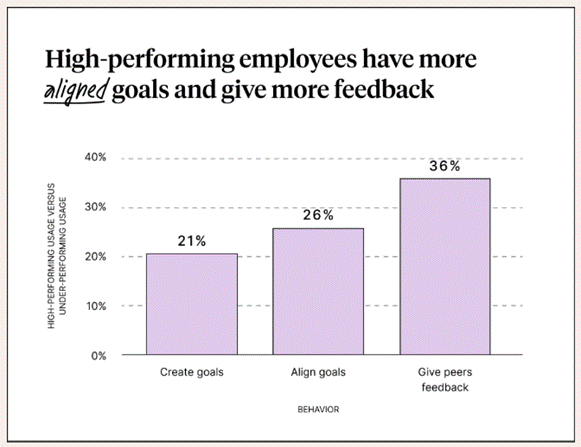
Source: CultureAmp
High-performing teams benefit from real-time measurement and feedback. According to Gallup’s analysis of over 180,000 teams, top-quartile teams were 18% more productive in sales and 23% more profitable than those in the bottom quartile. Tools and collaboration platforms with visual status updates allow teams to monitor progress, bottlenecks and dependencies. To embed agility, organisations should design smaller, autonomous teams, clarify purpose and boundaries, and empower decision-making at the level where work happens.
1.4 Applying Agile in Non-Tech Contexts
While agile methodologies originated in software development, they have been successfully translated into manufacturing, professional services and non-tech functions. The key lies in adapting principles—iterative learning cycles, cross-functional teaming, short feedback loops and continuous improvement—to the rhythm of the business. For example, a cross-functional operations team in manufacturing might adopt two-week sprints for problem-solving, supported by tooling and team rituals that structure learning and responsiveness.
2. Work Without Waste: Eliminating Hidden Productivity Drains
2.1 Identifying Productivity Drains
Even the best teams can be undermined by hidden productivity drains—unnecessary meetings, unclear prioritisation, technology complexity and siloed communication. A survey of developers by IT Pro found that they lost nearly 20 working days per year due to tool failures, debugging, and inefficient workflows. Diagnostic tools such as process mapping and time audits help spotlight these leaks in performance.
2.2 Process Mapping and Technology Leverage
Once productivity drains are identified, organisations must streamline workflows. For example, process mapping across hand-off points can reveal duplicated effort or delayed approvals. Technology plays a role: centralised collaborative platforms reduce lost time chasing information. As one industry blog suggests, replacing ad-hoc meetings with asynchronous status updates can cut wasted hours and restore flow.
2.3 Focus and Time Management in Hybrid Teams
Hybrid and remote teams face unique productivity risks: attention fragmentation, unplanned interruptions, and blurred work boundaries. Organisations must redesign structures—introduce “focus blocks,” limit meetings to required participants, clarify asynchronous norms and monitor usage of work tools. Smaller team sizes and clarity of roles also correlate with higher performance: a study found that teams of three to five people outperformed larger groups.
2.4 Behavioural Insights & Performance Friction
Beyond the structural and technological dimensions, behavioural factors—such as multitasking, fear of making mistakes or unclear accountability—create performance friction. Psychological safety again plays a role: when people feel safe to stop non-value work, escalate blockers or call out inefficiencies, teams can significantly raise output.
3. Integrative Framework: From Strategy to Execution
3.1 Diagnostic Phase
Start by assessing team health, work processes and technology friction. Use surveys to gauge engagement and psychological safety; process mapping to identify workflow gaps; and task analysis to measure time drains and waste.
3.2 Design Phase
- Team Design: Reorganise into agile, cross-functional pods with clear charters and autonomy.
- Leadership Development: Train managers in coaching, psychological safety and decision-making delegation.
- Workflow Optimisation: Remove bottlenecks, automate repeat tasks, and redesign meeting norms.
- Measurement Framework: Build dashboards tracking engagement, time spent on core work, number of blockers, and cycle times.
3.3 Implementation Phase
- Introduce micro-learning for agile ways of working, decision protocols and team rituals.
- Launch a pilot unit (e.g., one department or product team) to test redesigned structures, tools and rituals.
- Monitor and adjust weekly through retrospectives, feedback loops and real-time metrics.
3.4 Sustain & Scale
- Foster continuous improvement via team huddles, root-cause reviews, and allowances for innovation time.
- Expand to other teams based on pilot results, refining frameworks and tooling.
- Tie reward systems and leadership KPIs to team effectiveness measures, not just individual output.
4. Expected Outcomes & Performance Indicators
Source: Hypercontext
By adopting the combined approach of agile team design and productivity-drain elimination, organisations can expect:
- 20–30 % uplift in team productivity and output.
- 25 % reduction in lost time and meeting overload.
- Enhanced employee engagement, which correlates with increased profitability. (Gallup)
- High team morale, lower turnover (as psychological safety grows) and faster decision cycles.
- Scalability and faster response to market or operational changes.
Conclusion
The age of rigid structures, traditional performance models, and generic development interventions is rapidly fading. In its place, a new paradigm is emerging—one where organisations intentionally design adaptive, psychologically safe, and data-driven team ecosystems capable of thriving amid uncertainty. High-performing teams are no longer built through fear or pressure, but through clarity, trust, empowerment, and the systematic removal of productivity barriers that quietly hold organisations back.
Companies that embrace this shift gain more than engaged employees—they secure a sustained competitive advantage, stronger innovation capacity, and measurable improvements in productivity, profitability, and talent retention. The organisations that will lead the future are those that invest today in reshaping how their teams operate, collaborate, and grow.
How Proten International Can Help
If your organisation is ready to build resilient, high-performing teams and transform your workforce into a true engine of performance, Proten International is ready to support you. Our Training, Learning & Development, and HR Advisory specialists help organisations diagnose performance gaps, optimise team structures, cultivate leadership excellence, and design end-to-end people strategies that deliver lasting impact.
To begin your transformation, contact us at info@protenintl.com or visit www.protenintl.com to schedule a strategic consultation. Let’s partner to unlock the full potential of your people and build the high-performing teams your organisation deserves.