
Picture this for a second…
Your best employee, the one who consistently delivers, mentors others, and quietly holds the team together out of the blue, hands in their resignation.
When you ask why, the answer stops you cold. “I just didn’t know where I stood. I hadn’t had a real conversation about my growth in over a year.”
No bad manager. No toxic culture. Just silence. And silence, it turns out, is expensive.
This scenario plays out in organisations every day, and almost always traces back to the same root cause: a performance management system that exists on paper but fails in practice.
The annual form gets filled out, the awkward conversation happens, the document gets filed, and nothing changes. Until someone leaves.
The modern workplace demands more than that. Employees expect clarity on what is expected of them, regular feedback on how they are doing, and a genuine path to grow.
Organisations that deliver on those expectations build teams that are aligned, motivated, and productive. Those that don’t are quietly bleeding their best talent often without ever seeing it coming.
This guide breaks down what performance management really is, why it matters, and exactly how to build a system that drives results, not just compliance.
What is Performance Management?
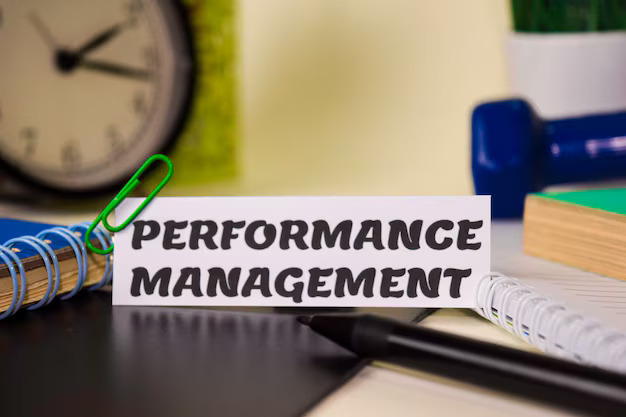
Performance management is the ongoing process through which leaders align individual effort with organisational goals, support employee development, and drive consistent results. The keyword there is ongoing; this is not a once-a-year event.
At its core, an effective performance management system has four moving parts:
- Goal setting: clear, measurable targets at both the team and individual level
- Continuous feedback: regular communication between managers and employees, not silence punctuated by an annual review
- Performance appraisals: structured evaluations that look at both results and behaviour
- Employee development: connecting performance data to growth, training, and career progression
HR plays a critical role in designing and maintaining the system, but performance management ultimately lives and dies at the manager level. It is a business discipline, not an administrative function.
Ready to turn performance conversations into real results? Download our free Performance Review Checklist, everything you need to run reviews that are fair, consistent, and built for growth.
Why Performance Management Matters

Done well, performance management is a direct driver of business outcomes. Organisations with strong performance systems consistently report higher productivity, better employee engagement, lower turnover, and clearer accountability at every level.
What happens without it? Teams drift. People work hard on the wrong things. Managers avoid difficult conversations. High performers get frustrated watching underperformance go unaddressed, and eventually they leave. Morale erodes not because people are unhappy, but because they lack direction and recognition.
The modern workforce has also raised the bar. Employees, especially top talent, expect to know where they stand, where they are headed, and what support they will get to get there. An organisation that cannot answer those questions clearly will always struggle to hold onto the people it needs most.
Key Components of an Effective Performance Management System

1. Goal Setting and Alignment
Everything starts here. If your employees do not have clear, measurable goals that connect directly to the organisation’s strategic objectives, you do not have a performance system. You just have a collection of individuals doing their best guess at what matters.
Goals need to be specific, achievable, and tied to outcomes that actually move the business forward. Both team-level and individual-level targets should exist, and employees should be able to draw a clear line from their daily work to the company’s broader direction.
2. Continuous Feedback
Annual reviews are not enough. By the time a manager sits down to give annual feedback, twelve months of missed opportunities have already passed, both to course-correct problems and to reinforce what is working.
High-performing organisations build regular check-ins into the rhythm of work. Monthly or quarterly conversations focused on progress, blockers, and development are far more effective than one high-stakes annual meeting. The goal is a consistent communication loop, not a yearly surprise.
3. Performance Appraisals
Structured appraisals still have a role to play, but they should be one moment in an ongoing conversation, not the whole conversation. A good appraisal process evaluates both results (what was achieved) and behaviour (how it was achieved). Both dimensions matter, especially as organisations build for culture and leadership pipeline alongside short-term delivery.
3. Learning and Development
Performance data is only useful if it leads somewhere. When a gap is identified, whether a skill deficit, a knowledge gap, or a leadership blind spot, there should be a clear path to address it, which means connecting performance outcomes directly to training programmes, mentorship, and career development conversations. When employees see that performance management helps them grow rather than just judges them, engagement with the system increases significantly.
4. Rewards and Recognition
People need to see that performance has consequences, positive ones, not just corrective ones. Linking performance outcomes to recognition, compensation, promotions, and opportunities sends a clear signal that the organisation is paying attention and that effort and results are valued. Fairness and transparency in how those decisions are made are non-negotiable. Nothing undermines a performance system faster than rewards that feel arbitrary or politically driven.


Common Performance Management Challenges

Even well-intentioned performance systems break down. Here is where organisations most commonly go wrong:
- Inconsistency across managers: Without a standardised framework, performance management quality varies wildly depending on who the manager is. Some employees get meaningful feedback; others get nothing.
- Poorly defined KPIs: Vague expectations produce vague outcomes. If a performance indicator cannot be measured, it cannot be managed.
- Bias in the review process: Unstructured evaluations leave too much room for recency bias, affinity bias, and inconsistency. Structured frameworks and calibration processes exist precisely to address this.
- Infrequent feedback cycles: Monthly or quarterly conversations feel like too much until you consider the cost of the alternative, disengaged employees, and unaddressed problems compounding over time.
- Weak alignment with business strategy: Performance management that is not anchored to what the business actually needs to achieve is theatre. It looks like a system, but it produces no real business value.
- Resistance from employees and managers. When people have had bad experiences with performance management in the past, they resist new systems. That resistance is earned, and it needs to be addressed directly through design and leadership.
How to Build an Effective Performance Management System

Step 1: Define Clear Organisational Goals
Before you can manage performance, you need to know what you are managing toward. Start at the top. What does the business need to achieve in the next 12 to 24 months? Translate that strategy into measurable goals that can cascade down to teams and individuals.
Step 2: Set Role-Based KPIs
Every role in the organisation should have clear performance indicators. Not generic ones borrowed from a template, but indicators that reflect what that role actually needs to deliver for the business. Ambiguity at this stage is expensive. When expectations are unclear, performance conversations become subjective, and subjectivity erodes trust.
Step 3: Implement Regular Check-ins
Monthly or quarterly performance discussions should become a non-negotiable part of how managers work. These conversations do not need to be long or formal, but they need to be consistent. The focus should be on progress against goals, development needs, and blockers, not on retrospective judgment.
Step 4: Train Your Managers
This is where most organisations underinvest. Managers are the primary delivery mechanism for performance management. Yet, many are promoted into leadership roles with no real training on how to give effective feedback, have difficult conversations, or coach for development. A performance management system is only as good as the managers operating it.
Step 5: Use Data and Tools
Modern HR platforms make it possible to track performance trends, reduce bias through structured evaluation frameworks, and surface insights that manual processes would miss. Technology is not a substitute for good management, but it is a meaningful enabler. Use it to bring consistency and rigour to the process.
Step 6: Link Performance to Growth
Close the loop. When performance outcomes are consistently connected to promotions, development opportunities, rewards, and career conversations, the system becomes self-reinforcing. Employees engage with it because it is clearly working in their interest. That is the goal.


Modern Trends in Performance Management

The discipline is evolving quickly. A few developments worth paying attention to:
The shift from annual reviews to continuous performance management is now mainstream in high-performing organisations. The evidence supporting more frequent, lower-stakes feedback is overwhelming.
HR technology platforms are making it easier to track performance data, facilitate real-time feedback, and reduce the administrative burden on managers. Adoption is accelerating.
Employee experience is increasingly central to how performance systems are designed. Organisations are recognising that a process employees dread is a process that will not deliver results.
Skills and growth are displacing rigid rating systems as the primary currency of performance conversations. The question is shifting from “what score did you get?” to “what are you building toward?”
And with hybrid and remote work now a permanent feature of the workplace landscape, how performance is measured and how managers maintain visibility without micromanagement has become a critical design challenge that every organisation needs to address intentionally.
The Impact of Strong Performance Management on Business Growth

Strong performance management is not a cost centre. It is a growth lever.
When you have reliable performance data, decision-making improves on hiring, promotions, restructuring, and where to invest in development. When employees know where they stand and see a path forward, retention improves and the cost of turnover drops. When performance is managed consistently and transparently, you build a stronger leadership pipeline because high performers are identified early and developed intentionally. The cumulative effect is an organisation that moves faster, wastes less, and builds the talent it needs rather than constantly scrambling to replace it.
The connection between effective performance management and profitability is not theoretical. It is measurable, and the organisations treating it as a strategic priority are seeing the results.
Conclusion
Performance management is not an HR checklist. It is one of the most important operating systems a business can build, and it requires genuine structure, consistent leadership involvement, and a commitment to making it work at every level of the organisation.
The organisations that get this right build something that compounds over time: teams that are aligned, managers who lead with clarity, and employees who understand what is expected and what is possible. That is not a soft outcome. That is a competitive advantage.
If your current system is not delivering that, the good news is that the path to a better one is clear. The work is in execution.
Frequently Asked Questions

What is the purpose of performance management?
The purpose of performance management is to align individual and team effort with business goals, drive consistent performance, support employee development, and create the accountability structures that allow an organisation to operate at its best.
How often should performance reviews be done?
Formal appraisals are typically conducted annually or biannually, but the most effective organisations supplement these with monthly or quarterly check-ins. Feedback should be continuous, not confined to a single annual event.
What makes a good performance management system?
A good system has clear goals, consistent feedback loops, structured appraisals, a direct connection to employee development, and strong manager capability. It is transparent, fair, and visibly tied to outcomes that employees care about.
Why do performance management systems fail?
Most systems fail due to inconsistent implementation, poorly defined expectations, undertrained managers, infrequent feedback, or a disconnect between the performance process and actual business strategy. When employees and managers do not trust the system, it collapses into compliance theatre and produces nothing of value.