The telecommunications industry is changing rapidly. Traditional telecommunications companies are increasingly moving beyond providing network connectivity to becoming technology-driven organisations that offer digital platforms, financial services, enterprise solutions and other technology-enabled services.
This shift requires organisations to become more agile, collaborative and data-driven. For MTN Nigeria, this transformation has been closely linked to the implementation of MTN Group’s Ambition 2025 strategy, which focused on strengthening connectivity, expanding digital services, accelerating transformation and creating shared value across its markets.
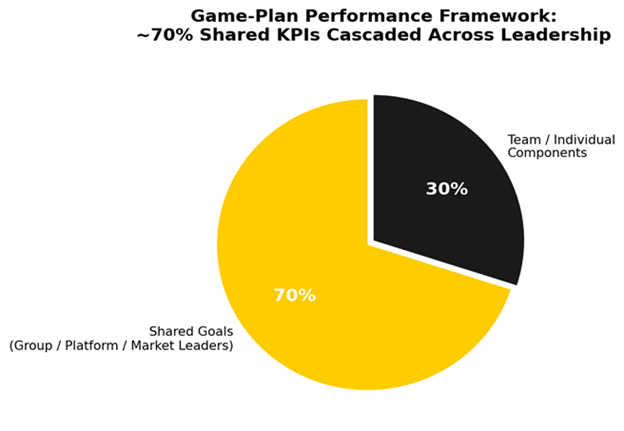
Source: MTN Nigeria Annual Report / Sustainability disclosures.
MTN Nigeria operates in one of Africa’s largest and most competitive telecommunications markets. The company serves millions of customers in an environment shaped by rapid digital adoption, the growth of fintech, changing customer expectations and ongoing infrastructure challenges.
To respond effectively, MTN Nigeria recognised the need to move beyond traditional performance management approaches that focused heavily on individual targets and departmental responsibilities. Instead, the organisation adopted a more agile, team-based approach designed to encourage collaboration and align employee performance more closely with business priorities.
Moving Towards an Agile, Team-Based Performance Model
MTN Group documentation describes the move towards an “Agile team-based performance and talent framework” designed to improve KPI alignment. The approach is based on a simple principle: teams should work towards shared business outcomes rather than operating as separate functions with competing priorities.
Key elements of the approach include:
- Shared targets: Targets are shared appropriately between the Group and its operating companies.
- Team-based scorecards: Performance is measured using shared scorecards that cover both platform growth and core connectivity priorities.
- Customer-focused performance: Performance objectives are connected to customer needs and business outcomes.
- Team over individual: Greater emphasis is placed on what teams achieve together rather than individual performance in isolation.
- Consistent leadership measures: Standardised scorecards help create greater consistency in how senior leadership performance is assessed across the organisation.
The Role of Business Intelligence in Performance Management
An important part of the transformation has been the use of Business Intelligence (BI) to make performance information more accessible and useful to managers.
Rather than relying solely on periodic performance reviews, BI-enabled dashboards allow leaders and managers to monitor key indicators more regularly and identify areas that require attention.
This makes performance management more than an annual HR exercise. It becomes an ongoing management tool that can help leaders:
- Track progress against strategic objectives.
- Identify performance gaps earlier.
- Make decisions using current data.
- Improve accountability across teams.
- Respond more quickly to changes in business performance.
The combination of shared KPIs and better access to performance data therefore supports a more responsive and results-focused organisation.
Integrating Performance Management with Talent Development
MTN Nigeria’s performance approach is closely connected to its 6Bs talent strategy: Build, Buy, Borrow, Bind, Boost and Bounce. The framework provides a structured way of ensuring that the organisation has the skills and talent required to deliver its business strategy.
1. Build
The organisation invests in developing existing employees through targeted upskilling and reskilling programmes covering both technical and behavioural competencies.
Learning programmes were also designed around different learning preferences. MTN Nigeria reported that approximately 40% of employees were hands-on learners and 30% were visual learners, informing the design of learning interventions.
2. Buy
Where critical skills cannot be developed quickly enough internally, the organisation acquires talent from the external market. This is particularly relevant for specialised capabilities such as platform engineering, advanced AI and specialist technology architecture.
3. Borrow
The organisation also leverages external expertise through partnerships with technology vendors, consulting firms and academic institutions. This allows MTN to access specialised knowledge when required without necessarily having to build every capability internally.
4. Bind
For critical and highly sought-after skills, retention becomes an important part of the talent strategy. The organisation uses structured approaches to retain employees whose skills are important to its current and future business needs.
5. Boost
The organisation invests in leadership development to strengthen its leadership pipeline and prepare employees for greater responsibilities. MTN Nigeria reported a 90% participant satisfaction rate for its formal leadership development initiatives.
6. Bounce
The framework also recognises the need to address sustained underperformance. Employees who continue to fall short of agreed expectations, despite appropriate coaching and support, may be redeployed to more suitable roles or transitioned out of the organisation. The emphasis is on managing performance fairly and transparently rather than allowing persistent underperformance to go unaddressed.
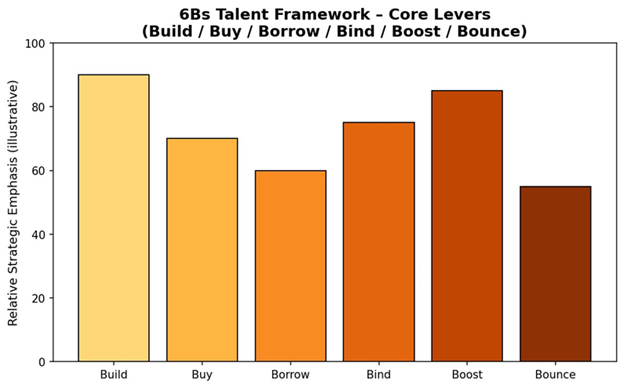
Source: MTN Nigeria leadership statements on the 6Bs model.
Key Outcomes
The integration of performance management, talent development and data-driven decision-making has supported several important organisational outcomes.
- Better Alignment and Collaboration
Shared team objectives help employees understand how their work contributes to broader business priorities. This reduces the risk of departments working in isolation and encourages greater collaboration.
- Faster, Data-Driven Decision-Making
BI-enabled performance dashboards provide managers with greater visibility of performance information. This allows issues to be identified and addressed more quickly.
- Strong Employee Engagement
MTN Nigeria reported an employee engagement level of approximately 87%, demonstrating that strong performance expectations can coexist with positive employee engagement when supported by appropriate talent practices and continuous feedback.
- Stronger Internal Talent Mobility
The organisation reported a 25% increase in internal promotions, suggesting that its talent development and succession initiatives have strengthened the internal leadership pipeline and reduced dependence on external recruitment for some senior positions.
- Continuous Learning
MTN Nigeria has also incorporated self-paced and micro-learning opportunities into employees’ day-to-day work. These initiatives allow employees to develop new digital capabilities and pursue certifications without taking significant time away from their core responsibilities.
What Organisations Can Learn from the MTN Approach
The MTN Nigeria case provides several lessons for organisations seeking to strengthen their performance management and talent development systems.
1. Align Performance with Business Strategy
Performance management should begin with the organisation’s strategic priorities. Individual and team KPIs should clearly show how employees contribute to broader business outcomes.
2. Move Beyond Individual Targets
Individual performance remains important, but organisations should also establish shared team objectives where collaboration is essential to achieving results. A greater emphasis on shared goals can help break down functional silos and encourage employees to take collective responsibility for outcomes.
3. Make Performance Data Accessible
Performance information is most useful when managers can access it when they need it. BI dashboards can turn performance data into a practical management tool, helping leaders monitor progress, identify gaps and make informed decisions.
4. Connect Performance to Talent Development
Performance management should not operate separately from learning and development. Performance data can help organisations identify skills gaps, determine development priorities and make better decisions about who should be developed, promoted, redeployed or supported.
5. Treat Talent as an Ecosystem
The 6Bs approach demonstrates that organisations do not have to rely on a single talent strategy. They can develop existing employees, recruit externally, access specialist expertise through partnerships, retain critical talent, accelerate leadership development and manage sustained underperformance as part of one integrated approach.
6. Support Performance with the Right Culture
Performance systems work best when employees understand what is expected of them and receive regular feedback and support. Clear expectations, continuous learning and fair performance management can help organisations maintain high standards while sustaining employee engagement.
Conclusion
MTN Nigeria’s evolution towards an agile, team-based performance framework demonstrates how performance management can become a strategic business tool rather than simply an annual HR process.
By combining shared KPIs, BI-enabled performance visibility and an integrated talent strategy, organisations can create stronger alignment between business strategy, employee performance and capability development.
The broader lesson is that effective performance management is not simply about measuring what employees have achieved. It is about creating a system that helps the organisation set the right priorities, measure progress, develop the capabilities required to succeed and take timely action when performance falls short.
At Proten International, we help organisations design and implement performance management systems that create clarity, strengthen accountability and connect employee performance to measurable business outcomes.
A structured discovery session can help identify gaps in your existing performance management approach and determine the right framework for your organisation’s culture, workforce and strategic priorities. Contact Us today to get started.